
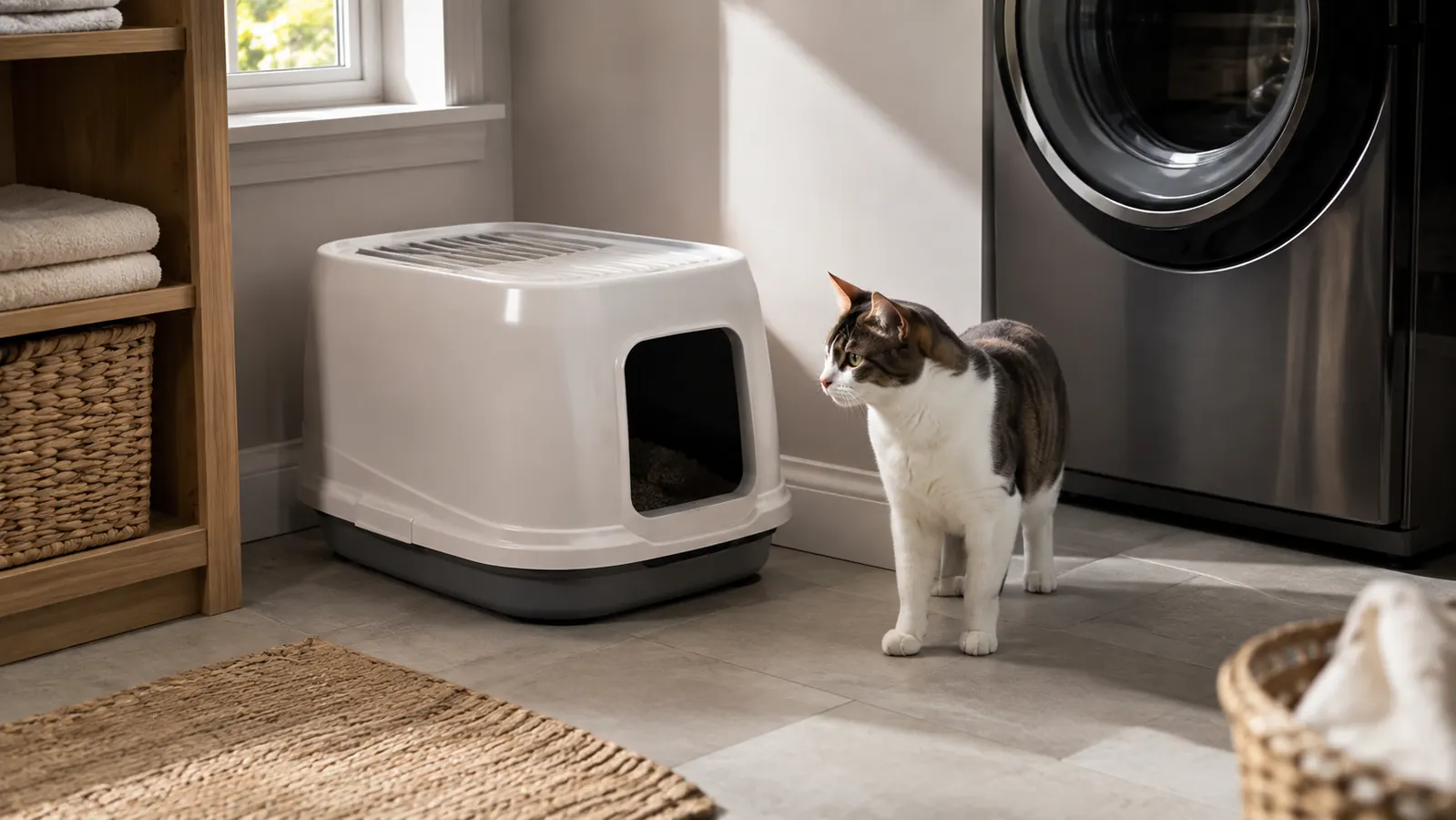
If your cat has started going outside the box, or you are tired of sweeping litter off the floor twice a day, the fix is rarely the litter itself. After decades of cats, I have learned that the box you choose and where you put it matter more than what is inside it. Get those two things wrong and no amount of expensive litter will save you. Get them right and most of the mess just quietly stops.
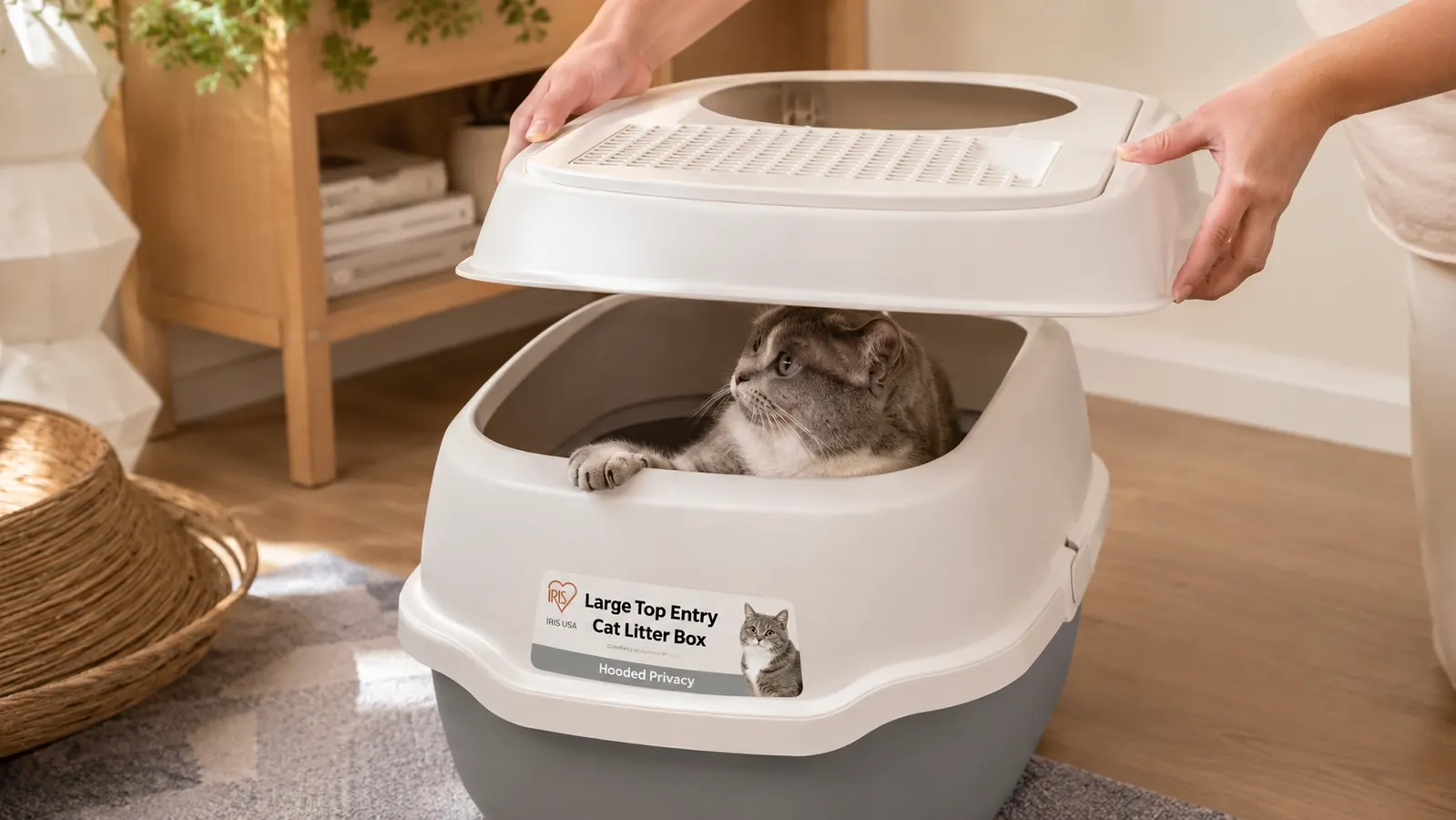
I am going to walk you through choosing a box, setting it up, and keeping it running the way our household has for years. The box I keep recommending is the IRIS USA Large Top Entry Cat Litter Box. It is the one that finally ended the litter trail across our hallway, but the steps below work no matter which box you land on.
Start With A Box That Keeps The Mess Where It Belongs
The IRIS USA top entry box is the one we reached for after a decade of front entry boxes left a litter trail down the hall. The lid keeps the smell and the tracked litter inside the box instead of on the floor. See today's price on Amazon.
Amazon Check Today's Price on Amazon →Step 1: Decide What Kind Of Box Your Cat Will Tolerate
Before you buy anything, think about your actual cat. An open pan is fine for a laid back cat that never kicks much litter. But most of us live with a digger, a cat that buries so hard the floor around the box looks like a sand pit, or a dog that raids the box like it is a snack bar. That is where an enclosed box earns its keep.
The tradeoff with a hood is that some cats like to see out while they go, and a closed-in box can feel like a trap to a nervous cat. The top entry design splits the difference. The entrance is on the roof, so the cat jumps up, drops in, and the hood still holds the smell and the flying litter. If your cat is old, arthritic, or very small, skip the top entry and use a low open pan instead. Watch your cat for a week before you commit.
Our grey tabby Mabel was eight when we switched to the top entry box. She is not a jumper by nature, but the flat roof is low enough that she steps up easily, and she never once balked at it. A nervous young kitten might be different, so match the box to the cat in front of you, not the one you wish you had.
On the hood question, the difference shows up in the air. An open pan dumps the smell straight into the room every time the cat goes. A front entry hooded box keeps some of it in, but the odor still leaks out the opening. The top entry design holds most of it inside the roof, so the room does not announce the last visit the way an open pan does. If odor control is your biggest complaint, and you have a dog that would watch the box all day, this is the design to lean toward.
Step 2: Get The Size Right
Size is the single most common mistake I see. A box that is too small is the fastest way to make a cat avoid it. The rule I use is simple: the box should be at least one and a half times the length of the cat, nose to base of tail. A fat cat crammed into a shallow pan will either go over the edge or find somewhere else entirely.
The IRIS USA top entry box is on the large side, which is exactly why we picked it. Our tom Finn is a solid 13 pounds, and he has room to turn around and dig properly without his paws hanging over the rim. If you have a big cat, do not assume the cheapest pan at the store is fine. Measure your cat and buy accordingly.
One more point on size that most guides skip: if you have more than one cat, the golden rule is one box per cat plus one extra. Two cats, three boxes. We keep a second open pan in the basement for Finn, who likes options, and the top entry box lives where the traffic is.
While you are sizing, think about coverage as well. A high sided open box helps with a hard digger but still leaves the front open for kicked litter and the occasional spray. A fully covered box, whether top entry or front door, contains the mess better at the cost of a little more cleaning inside the hood. There is no perfect answer, only the tradeoff that fits the cat you live with.
Step 3: Pick The Litter And Fill It To The Right Depth
Litter choice is personal to the cat, so do not be afraid to test a couple of brands. What matters more than the brand is the depth. Fill the box with three to four inches of fresh litter. Too shallow and the cat hits the plastic bottom, which many cats hate and will make them avoid the box. Too deep and the clumps stick to everything and waste litter every scoop.
With a top entry box, go with a clumping litter. The enclosed hood does not do the clumping for you, and a clumping clay makes the daily scoop a quick job. Avoid the ultra dusty dust if you can, because the fine dust settles in the hood vent and you will be wiping it out every week.
We use a standard unscented clumping clay. Mabel never liked the heavy scented versions, and honestly the hood already does the odor control, so I would rather skip the perfume. Fill to the depth line printed inside the box and top it up whenever a scoop pulls it down below three inches.
A word on smell, since it is usually the reason people are shopping in the first place. The hood holds the odor, but it only holds it if the box gets scooped. No litter, no matter how pricey, beats a daily scoop inside a covered IRIS box. If you want the least fragrance in the air, pick an unscented clumping litter and let the box do the work instead of masking the smell with a perfume your cat has to breathe.
Step 4: Put It In A Spot The Cat Actually Wants To Use
Placement is where most setups fall apart. Cats want three things from a box location: quiet, privacy, and an escape route. Do not shove the box in the loudest corner of the laundry room next to the dryer, and do not tuck it behind the water heater where it feels like a dead end. A spot with a clear exit is what a cat looks for.
Keep the box away from the food and water bowls. Cats are fastidious about this and many will refuse to use a box that sits right next to where they eat. And if you have a dog, keep the box somewhere the dog cannot reach, both for the cat's comfort and for your own sanity.
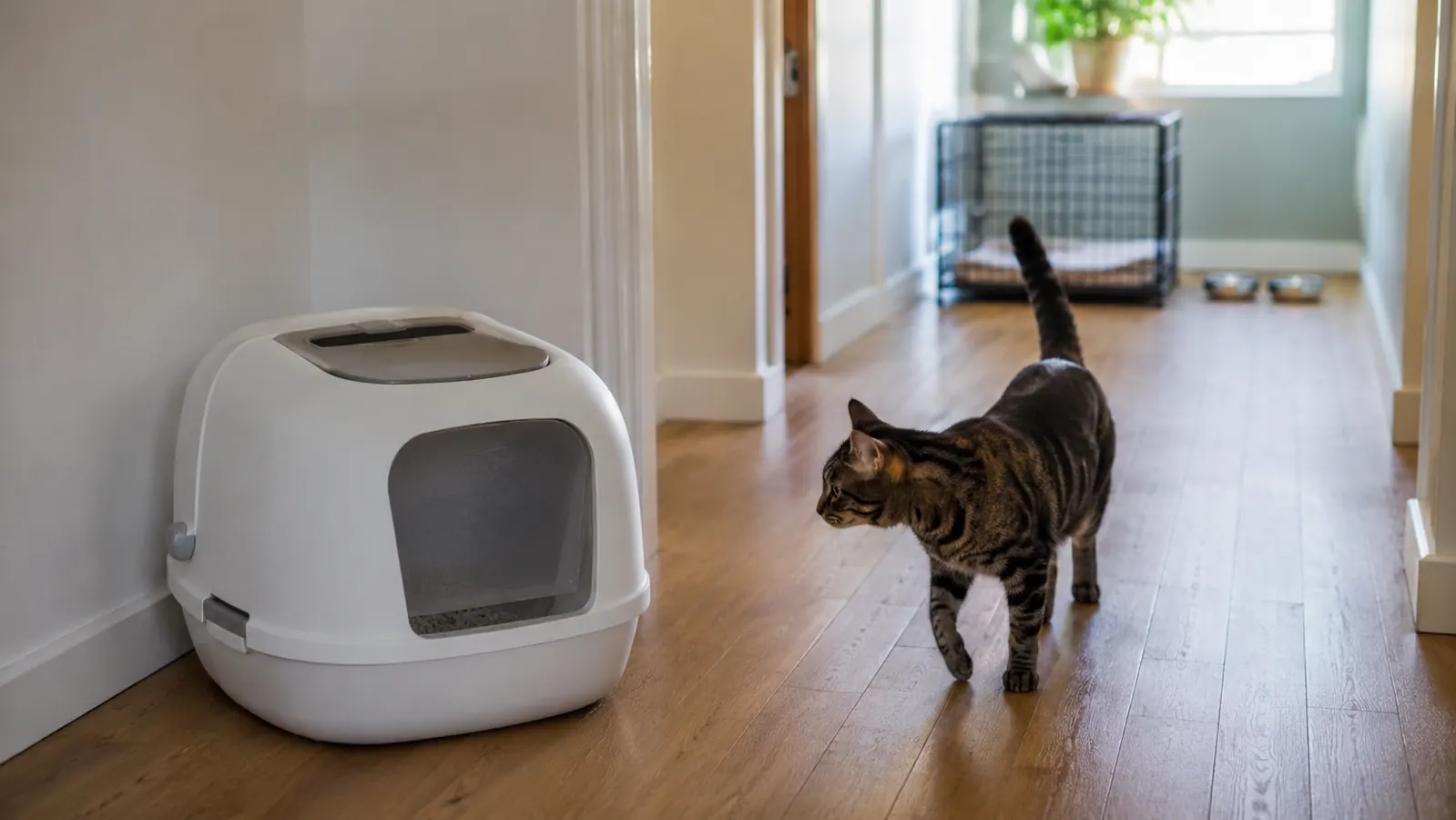
We moved the top entry box to the far side of the hallway, out of the direct path of the dog crate and a good ten feet from the food bowls. It sits flat on the floor with nothing leaning on it. Within three days the litter trail down the hall was gone, because the cat no longer had to dash from the box to escape the dog.
Switching a cat to a new box is a slow game, and rushing it backfires. When we brought the IRIS USA top entry box into the house, we did not retire the old pan on day one. We set the new box up next to it, kept the old one clean too, and let Mabel decide on her own schedule. Inside a week she was using the top entry full time, and only then did we put the old pan away. With a nervous cat, give the change a full two weeks before you take the old box away.
Step 5: Set Up A Cleaning Routine And Stick To It
No box works if you let it go. Scoop solids and clumps at least once a day, and for a top entry or hooded box the simpler truth is that you should scoop before the smell can build up inside the hood. Twice a day is better if you have two cats sharing one box.
Once a week, empty the whole thing, wash the pan and the hood with warm water and a mild dish soap, dry it completely, and refill with fresh litter. Do not use bleach or harsh cleaners, the smell lingers and can turn a cat off forever. A clean dry box is the cheapest insurance against a cat that decides to use your houseplant instead.
The reason I like the top entry design here is practical: the lid lifts right off, so washing the pan is a ten minute job with no reaching around a hood. The smooth interior wipes clean without you scrubbing seams. That ease of cleaning is the difference between a routine you keep and one you quietly abandon.
Two or three times a year, give the box a deeper clean than the weekly wash. Empty it, rinse, and let a mix of warm water and vinegar sit in the pan and lid for ten minutes before you scrub and rinse again. This clears the build up a quick weekly wash misses, and it stops the plastic from absorbing odor over time. On the IRIS USA box the parts are simple to handle, so the deep clean is just as easy as the regular one.
What Else Helps
A few small things make the whole setup work better. Keep a litter mat just outside the entrance to catch what the cat kicks off its paws. With a top entry box, that is less of a worry because most of the litter falls back inside the roof opening, but a mat under the box still saves the floor.
Watch your cat's behavior for the first two weeks. If it stops using the box, do not blame the cat, look at the setup. Too small, too dirty, too noisy, or in a spot the dog patrols, all of these read as the same message to a cat. Fix the setup, and nine times out of ten the behavior follows.
Give it a full wash with fresh litter every week, no exceptions. On a top entry box the lid vent also collects dust, so wipe that out with the weekly clean rather than letting it cake on. It takes two extra minutes and keeps the box from smelling like a gym locker.
One last tip for a bigger house: put a box on every floor your cat actually uses. A cat that has to climb stairs to find the box when it needs to go will sometimes just not make it. Two cats in a two story house mean a box on each level. The covered top entry takes up little floor space, so it does not crowd a hallway the way a bulky pan can.
We moved the box ten feet from the dog crate and the litter trail down the hall vanished in three days. Placement fixed what no litter brand ever could.
One honest note for older cats: if your cat is senior or has joint trouble, a top entry box may be too much of a step. In that case lean on the size rule, use the lowest open pan that still fits the 1.5x length rule, and place it somewhere with an easy exit. The goal is a box your cat accepts, not the one that looks best in the catalog.
The Box We Landed On After A Decade Of Trying
If you are tired of sweeping litter and fighting a smell that no top dressing fixes, the IRIS USA top entry box is a genuinely different setup to try. It solved the two problems we could never beat with a standard pan. Check today's price on Amazon and see if it is the fix your house needs.
Amazon Check Today's Price on Amazon →