
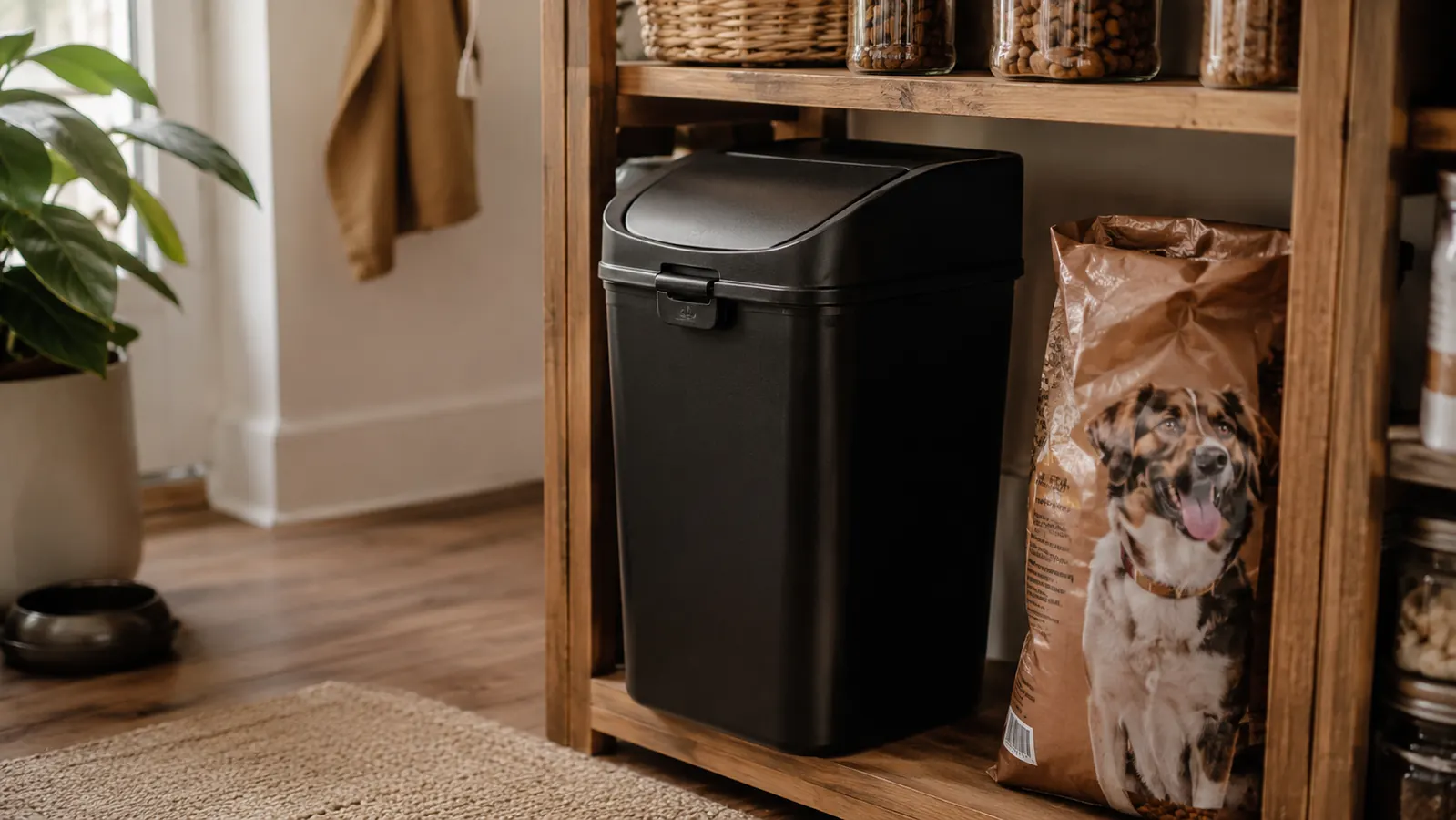
For the first twenty years we owned dogs, I did what most people do. Kibble stayed in the bag it came in, top folded over, bag shoved into the back of the pantry. Nobody ever told me that paper bag with a fold in it was doing almost nothing to protect the food. It was not until an August afternoon, when I found a trail of tiny beetles in a half bag of food, that I paid attention. When I finally switched to a real airtight bin, the differences showed up within a week. The one we settled on is the IRIS USA 38 lb container, a tall black unit with a gasket under the lid, and it has sat in the same pantry corner for years without ever letting us down. Here are the ten reasons, in plain terms, that made me wish I had made the change decades sooner.
The 38 lb airtight bin we keep every bag of kibble in
This is the bin that lives in our pantry right now. One flip of the lid, no bag folding, no twist ties, nothing to forget. Check today's price on the 38 lb size we use.
Amazon Check Today's Price on Amazon →It keeps the oils in the kibble where they belong
Kibble is sprayed with fats and oils to make dogs want to eat it, and those oils go rancid when air hits them. In an open bag, oxygen works on them day after day and the food slowly turns. Sealed up, the oils hold. The difference is subtle until it is not. Around week three in an open bag our dogs started leaving a few pieces behind; in the bin they clean the bowl every single time.
It keeps moisture out, so the food does not get stale
Humidity is the quiet enemy of dry food. Even in a dry pantry, an open bag picks up air moisture, and over weeks the kibble goes from crisp to soft and stale. Dogs notice before you do. An airtight bin holds a stable, dry pocket of air, so the kibble keeps its snap and no dog ever turns up a nose at a crisp piece.
It stops pantry moths and beetles dead
The reason I finally switched was a trail of tiny brown beetles in a bag of food one August. Pantry pests get into thin bag walls and multiply in the folds, and by the time you see one there are usually a hundred hidden away. A sealed plastic bin with a tight lid gives them nowhere to get in. Since we moved every bag into the bin, we have not thrown away a single contaminated bag of food.
It keeps the dog's nose out of the bag
Any dog that can reach the pantry floor can work a folded bag open given an afternoon. With a heavy lid on a bin, the food is out of reach and lifting that lid takes real effort. For a determined retriever, that is usually enough of a barrier. It also spares you the guilt of coming home to a bag gnawed open and half eaten.
It contains the smell instead of letting it fill the pantry
An open bag of fish-flavored food can make the whole pantry smell, and that scent lingers in the room for weeks. A sealed bin holds most of it inside. Ours is the tall black IRIS USA container with a gasket on the lid, and the difference in how strong the pantry smells is real. Guests cannot tell we keep two 38 lb bins in the back corner.
It keeps every piece at the same freshness
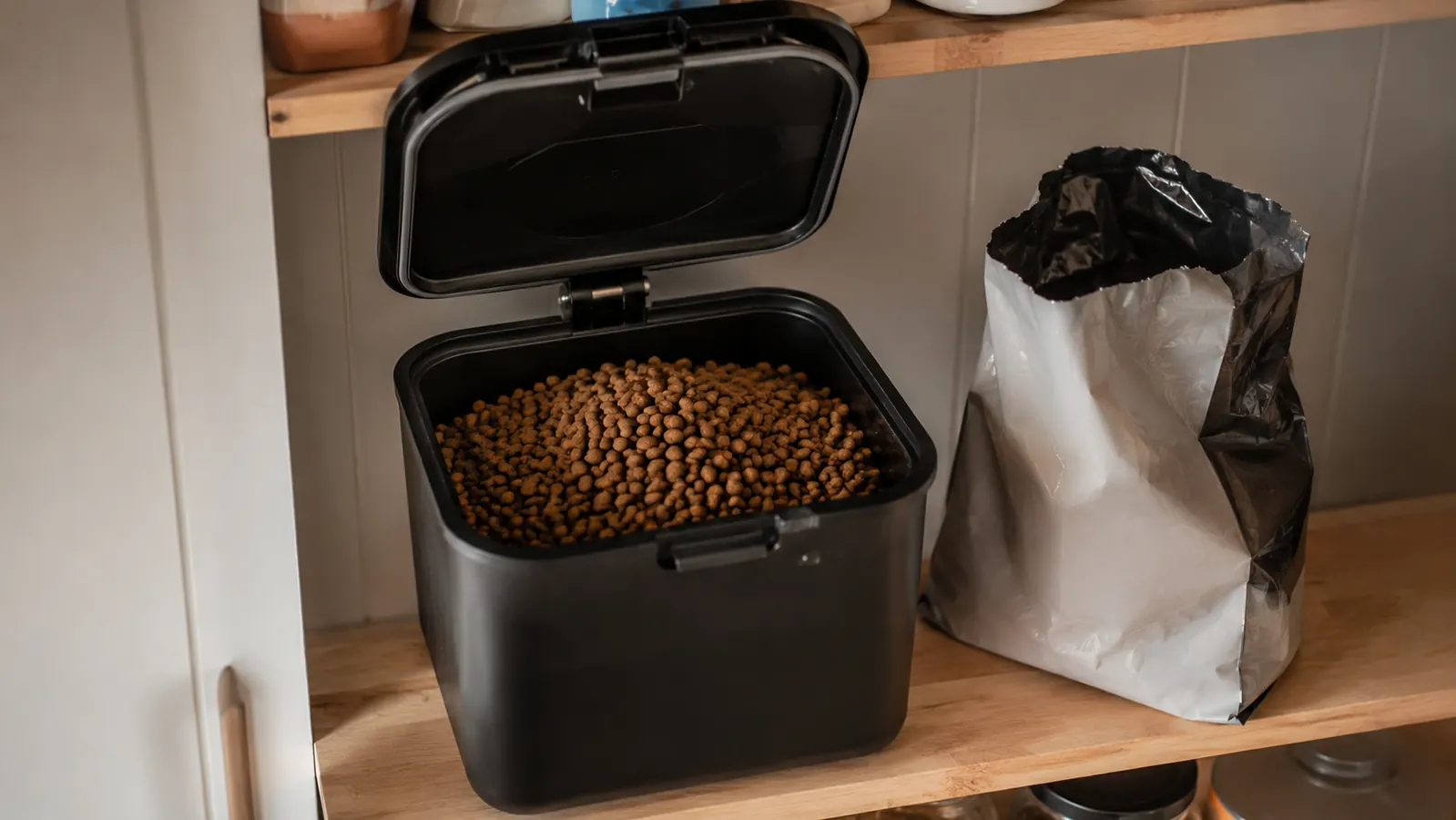
When you feed from an open bag, the bottom pieces are older and more exposed than the top, so the food does not age evenly. Every scoop from a bin comes out of one sealed, uniform supply, and the last scoop is as fresh as the first. For a two-dog household that goes through a 30 lb bag every few weeks, that evenness matters more than I expected.
It keeps mice and rats out of the food storage
If you live anywhere near a field, a barn, or even a detached garage, the odds are mice have gotten into a bag at some point. Rodents chew right through paper and thin plastic without a second thought. They will not get through a thick rigid bin. We are in a rural house, and since the switch the food storage is the one place that never shows teeth marks. No bait traps, no patched holes in a bag, nothing to paper over. The rigid walls simply are not worth chewing through.
We went from throwing away a half-bagged sack of food every couple of months to using every last scoop in the bin. That switch paid for the bin many times over.
It stops food waste that quietly eats your budget
Stale, pest-damaged, or stale-smelling food ends up in the trash. On the big bags we buy, that is a real loss, because you are throwing away whatever you paid per pound for that food. Feeding out of a bin removes most of the reasons for waste. Even at today's prices, a 30 lb bag wasted every couple of months adds up fast, and the bin has more than paid for itself in food we no longer throw out.
It makes measuring and feeding easier
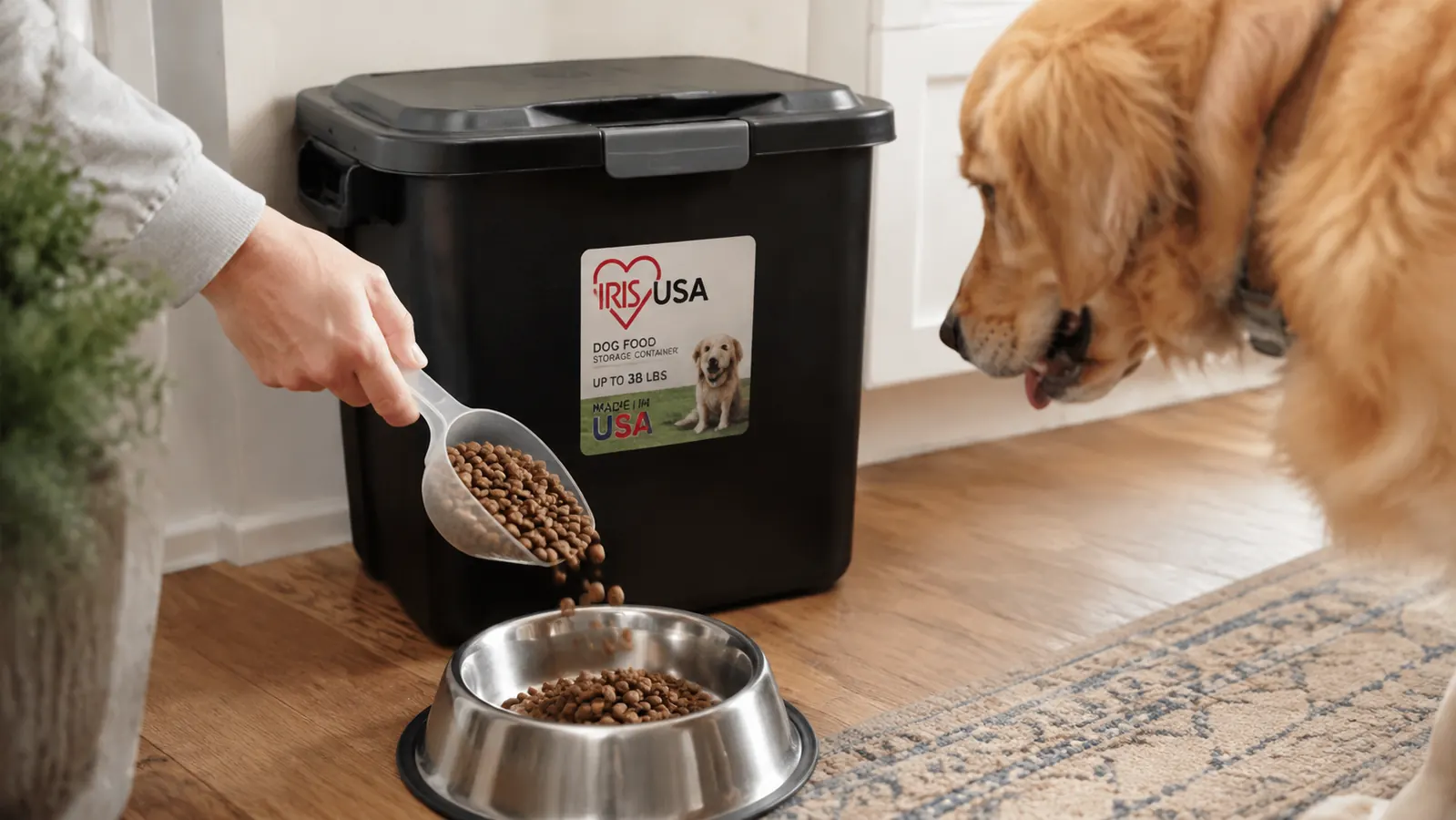
With a bin, your scoop works straight from the open top, no wrestling a bag that wants to fold in on itself. The IRIS USA bin has a flat top you can rest the scoop on while you measure. On a 6 am feeding in the dark, being able to reach in, scoop, and close in about five seconds is a small thing that adds up over hundreds of feedings in a year.
It protects the nutritional value over the life of the bag
Vitamins and fats degrade with exposure to oxygen, heat, and light. The longer food sits open, the more it breaks down, so the last part of the bag is never as good as the first. An airtight bin slows that process, and what your dog eats in week four is closer to what the manufacturer intended in week one. That is the whole point of dry food storage, and the reason most kibble bags tell you to reseal them.
What I'd Skip
I would not bother with the cheap clear plastic bins with the flimsy snap lids you find at the big box store. The lid is the whole job, and the cheap ones seal about as well as a folded bag, which defeats the purpose. I also would not buy a bin dramatically bigger than your bag size, because the extra empty air inside gives oxygen room to work. Match the bin to the bag, spend a little more on a thick bin with a real gasket, and you are set for years without thinking about it again.
The gasket-sealed bin that finally fixed our pantry
This is the 38 lb IRIS USA bin that holds every scoop of kibble in our house. It keeps the oils in, the moisture out, and the pests at bay, and it has paid for itself in food we no longer throw away. Check the current price before you decide.
Amazon Check Today's Price on Amazon →