
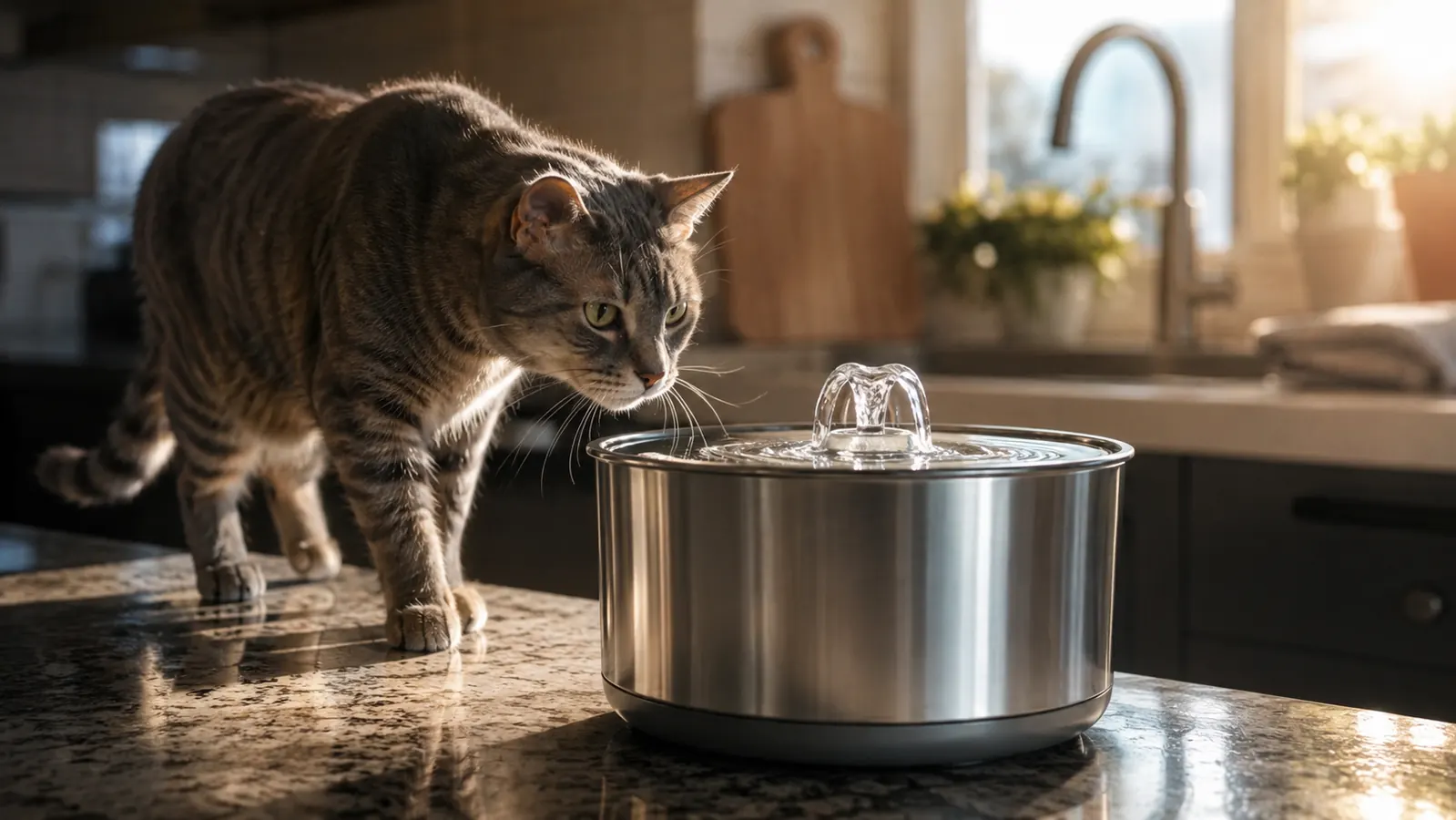
Callie has never been a big drinker. She is a nine year old muted tabby, ten pounds, and for years I watched her sniff a bowl of water, sit back, and walk off. I told myself it was fine. Then our vet, at her annual checkup, ran the numbers and said her urine was more concentrated than he liked in a cat her age, and he brought up the word kidney. Not a diagnosis, he said. Just something to keep an eye on as she gets older. That was the push I needed to stop hoping and start doing something.
I had already tried the usual tricks. A second bowl in the hallway, a bigger ceramic bowl, fresh water twice a day, even a glass one by the back door. She drank a little more for a week each time, then went back to ignoring them. I am not a gadget person, and I did not want to spend money on another thing that would sit in a cabinet. But I decided a circulating fountain was worth one honest shot, because moving water is the one thing I had never tried. I picked the GIOTOHUN stainless steel 2.2 liter model on purpose, because if I was going to try a fountain at all I did not want a plastic one I would be throwing away in a year.
The Quick Verdict
It got Callie drinking more in a way no bowl ever did, and the stainless steel is easier to keep clean than I feared, but you have to commit to a real maintenance routine or it stops being worth it.
Amazon Check Today's Price →The Fountain That Finally Made Our Picky Cat Drink
Six months in, this stainless steel circulating fountain is the one water source Callie actually drinks from daily. If you have a cat that ignores its bowl, it is worth trying.
Amazon Check Today's Price on Amazon →How I've Used It: Six Months As the House Waterer
I set it up on a Wednesday afternoon in January. The system is a 2.2 liter stainless steel reservoir with a small pump that pushes water up a center spout, where it streams back down into a basin and recirculates. Assembly took maybe ten minutes: rinse everything, fill the reservoir, plug in the pump, pour a little water down the spout to prime it. My one rule for myself, borrowed from every aquarium I have ever kept, was that I was not allowed to plug it in and forget about it. A pond you stop cleaning goes green fast. This is the same, just smaller.
That first week I made a mistake I want other people to avoid. I read the fifteen to twenty day filter advice on the box and took it as permission to leave the whole thing alone for two weeks. By day ten the pump had slowed to a trickle and the water had that faint, off smell you get when a surface is starting to grow a biofilm. The grease on my hands had gotten into the pump, and a little bit of food dust from the counter had settled in the basin. The fountain itself was not at fault. I was. Once I got the pump apart, rinsed it, and started wiping the basin out every few days, the water stayed clear and the pump ran at full strength.
The change in Callie was not instant. For the first four days she barely touched it, and I remember telling my husband I had wasted my money on a glorified humidifier. Then on day five I saw her hop onto the counter and dip her paw in the moving stream, the way cats do to test water. Within the week she was drinking from the basin two or three times a night. That was more than she had ever taken from a bowl, and the difference held through winter into spring.
What The Stainless Steel Actually Buys You
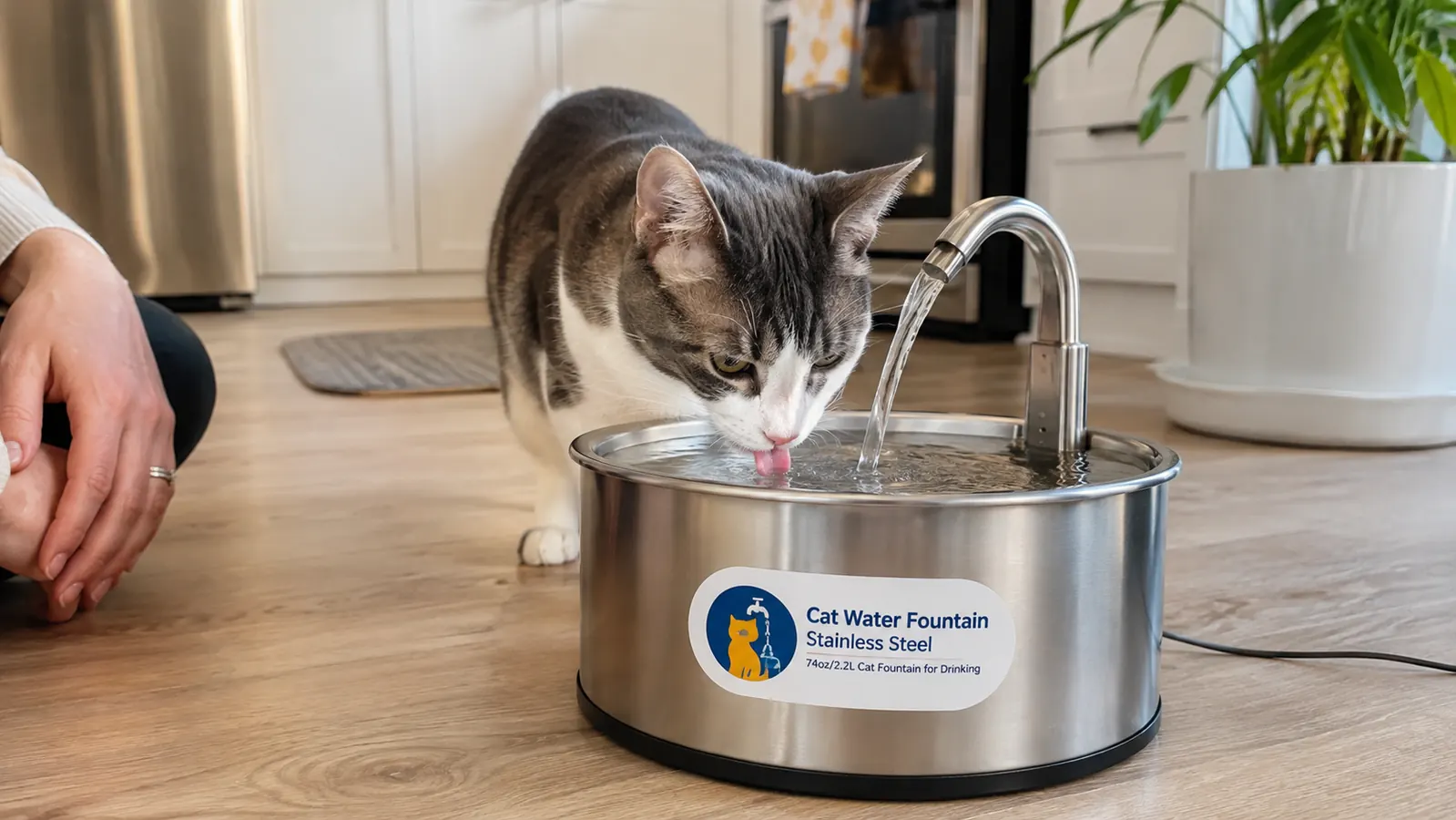
I chose stainless steel over plastic for one reason, and six months of daily cleaning has confirmed it: it is far easier to get truly clean. Plastic holds scratches, and every scratch is a little home for bacteria you cannot see. Stainless steel wipes down with a sponge and dish soap and comes out looking like new. When I wanted a deeper clean, I could put the basin in the dishwasher on the top rack and it was spotless.
The other thing the steel does, and this mattered to me more than I expected, is hold its temperature. On cold mornings the water in a plastic bowl felt icy, and Callie would not touch it. The stainless steel fountain kept the recirculating water at a comfortable room temperature, and I noticed she drank during the day rather than only after dark. For an older cat with any joint or kidney worry, that steady, not-too-cold water is a genuinely useful thing.
I will be straight about the one weak spot on the material: the steel is lighter than I expected for a 2.2 liter unit, and it is not non-slip. Callie is a ten pound cat and she can nudge the fountain around a little when she perches on the rim. I set it on a silicone mat after the first week and that solved it. It is not a flaw that would stop me buying it, but it is a real detail a first time buyer should know.
The Numbers I Actually Tracked
I did not just hope it was working. I made it easy to see. I filled the reservoir to the same line every Sunday and kept a rough note of how much water Callie and our dog Penny pulled between fills. Before the fountain, a full bowl could sit for two days barely touched by Callie. With the fountain running, I was topping the 2.2 liter GIOTOHUN reservoir every six or seven days, and most of that was going to the cat. For a ten pound cat, that was a real jump in her daily water, and it showed in how often she used her tray.
The clearest sign came at her vet visit in spring. The same test that had flagged concentrated urine six months earlier came back closer to normal. Not perfect, and the vet was careful to say a younger cat would show it differently, but the direction was right. I am not a vet and I am not claiming a fountain fixes kidneys. I am reporting one thing: a cat that was not drinking, started drinking, and her numbers moved the right way. That is the outcome I bought.
Where I Put It And Why That Mattered
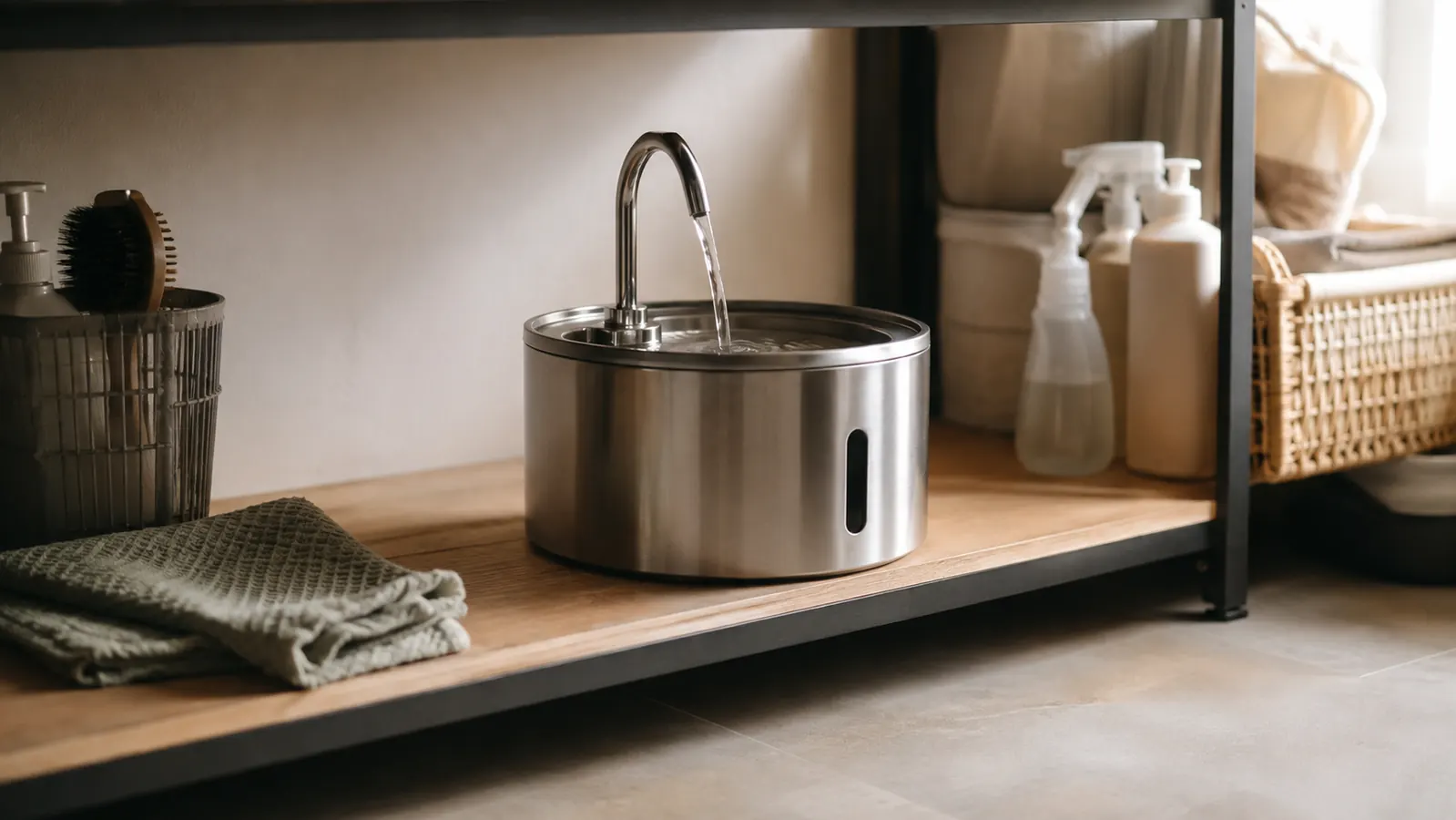
Placement turned out to be more important than I expected. I first set it up on the kitchen counter, where we keep the food bowls. Callie would drink, but she seemed uneasy about being so close to where the dog worked and came and went, and she always drank with one eye on the door. After a couple of weeks I moved it to the far end of the kitchen, on a low open shelf that is out of the main foot traffic but still where she already liked to nap. Within days she was drinking more freely and staying at the fountain longer.
The lesson I would pass on is to put a fountain somewhere a shy cat already feels safe, not crammed beside the noisy dog bowl. Cats decide whether water is worth the trouble based on how exposed they feel. A quiet corner, a clear line of sight, and no one barging through made far more difference to Callie than any feature on the box.
The Maintenance You Cannot Skip
Here is the part most reviews gloss over. A fountain is a proud little machine, and it only stays that way if you take care of it. My current routine, settled after a few false starts, is a five minute job every three to four days: unplug it, dump the water, wipe the basin and spout with a sponge and dish soap, rinse well, and refill. Once a month I take the pump apart, pull out the little impeller, rinse it under the tap, and give the filter a squeeze.
That monthly filter is a real recurring cost, and I want to be honest about it. The system uses a foam filter that you replace every few weeks, and a box of replacements is not expensive, but it is not a one time purchase. Budget for filters and for the occasional pump replacement down the road. A pump in a constantly running machine is a wear part, and I would expect to replace mine at some point during the life of the unit.
The first two weeks I treated it like a set-and-forget gadget and the water went off. The moment I started wiping the basin out every few days, it ran clean and Callie drank from it nightly. The maintenance is the whole game.
How Long The 2.2 Liter Reservoir Lasts Between Refills
With just Callie in the house, the two point two liter reservoir ran about five days before I had to top it up, and with our dog Penny sharing it, closer to six or seven. In the high heat of summer the water evaporated a little faster and I topped it every four or five days. That is the GIOTOHUN advantage over the smaller plastic fountains I had considered: a fountain that runs dry is a fountain that stops working, and this tank is big enough that nobody ran the pump dry overnight.
I also liked that I could fill it, cover it, and leave for a long weekend and come back to clean, capped water rather than the stale bowl I used to find waiting. A quick wipe and a fresh fill and it was good as new. That convenience is a big part of why this fountain stayed in the house when the novelty of earlier experiments wore off.
Who This Is For
Buy this fountain if you have a cat that is a light drinker, especially an older cat, and you are willing to spend five minutes every few days keeping it clean. It is genuinely good for multi pet households where one animal is shy about sharing water, because the moving stream draws them in. If you have a cat that has had a bladder issue or your vet has mentioned kidney health, the combination of fresh circulating water and more total intake is a sensible, low risk thing to try.
It is also the right pick if you have talked yourself out of a fountain before because of the plastic ones with the cloudy reservoirs. Stainless steel removes most of the reasons people give up on fountains: no scratched plastic, no plastic smell, no mystery discoloration. If your objection to a fountain was the plastic, this is the version that answers it, and the GIOTOHUN is the stainless model we would buy again.
Who Should Skip It
Skip it if you will not do the cleaning. I mean that as a kindness, not a scolding. If a twice-daily bowl refill already feels like a chore, a constantly running fountain with a pump, a filter, and a reservoir is going to be more work, and a neglected fountain is worse than a clean bowl. You would be better off with a large ceramic or steel bowl changed twice a day.
Skip it for very elderly or unsteady cats that struggle to jump onto even a low surface, because this fountain sits on the counter and has a lip to perch on. And if your household is prone to power outages, keep a plain bowl handy as backup, because the constant hum of a pump alone is not what makes the water move when the power is out.
What I Liked
- Stainless steel is easy to truly clean, no scratched plastic hiding bacteria
- Genuinely got our reluctant cat drinking several times a day
- Quiet enough to run in the kitchen all night without bothering anyone
- Simple setup, about ten minutes out of the box
- Recirculating water stays at a comfortable room temperature
Where It Falls Short
- You must commit to regular cleaning or it stops being worth it
- Replacement filters are a real recurring cost
- Lightweight and slightly non-slip, needs a mat or it slides
- Pump is a wear part that will eventually need replacing
The Honest Bottom Line
Six months in, I still feel the same way I did after the first month: for us, this fountain earns its place on the counter. It did the one thing bowls never did, which was get a nine year old cat to actually drink. It is not magic, it will not fix a sick kidney, and it absolutely requires a maintenance habit. But I keep it running, and every time I see Callie hop up and drink from that moving water, I am glad I stopped relying on a bowl.
If you are at the same point I was, a cat that will not drink and a worry you cannot quite shake, this is the version of a fountain I would buy again in a heartbeat. The cleaning is real, but so is the result.
Six Months Later, This Is Still The Bowl Callie Uses
After half a year of daily use, the stainless steel fountain is the one water source our picky cat drinks from. It is the fix that finally worked for us.
Amazon Check Today's Price on Amazon →