
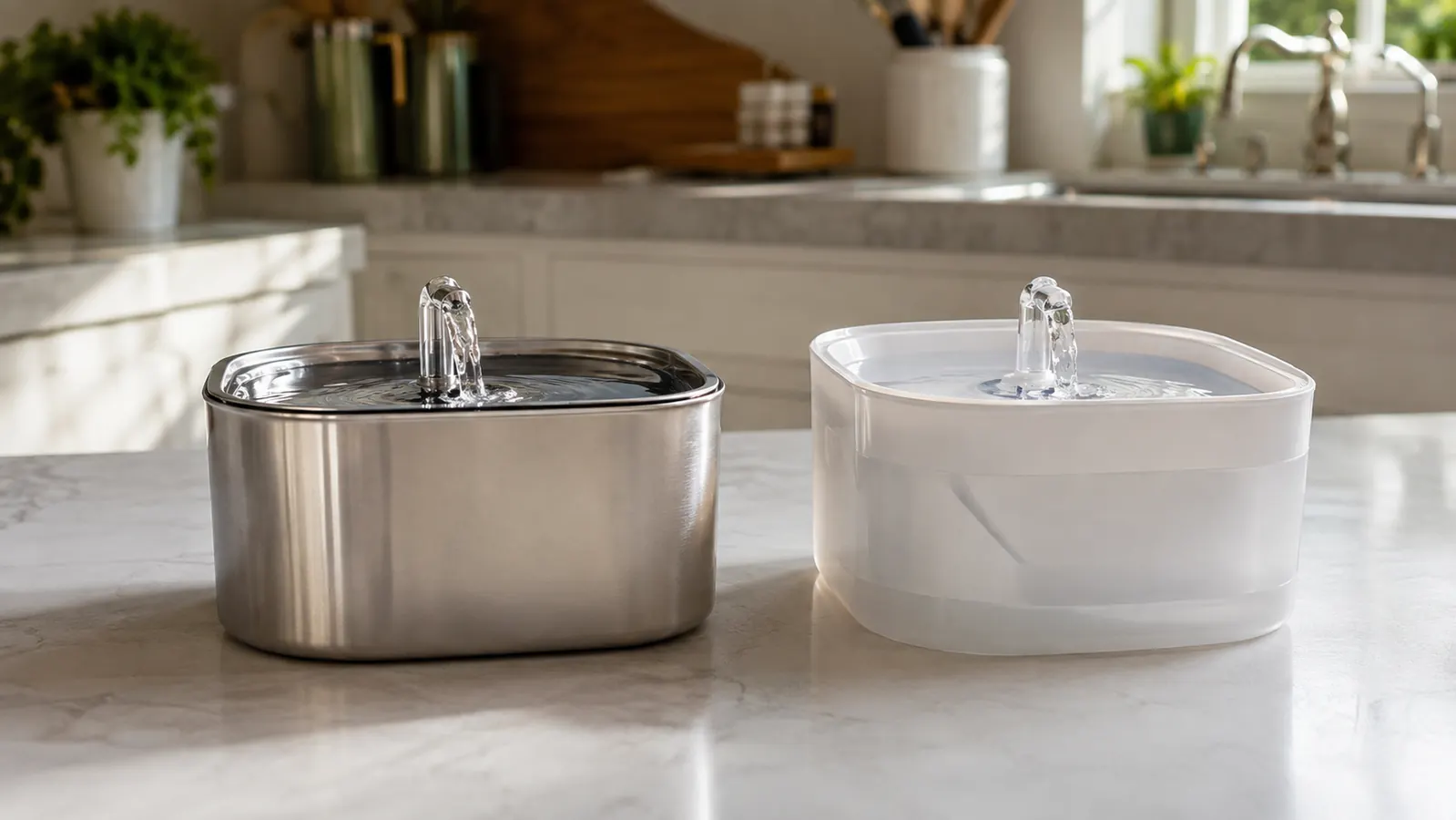
The short answer, after six months of running both side by side in our house, is that a stainless steel fountain is the one I would buy again, and the plastic one I would not. That is not because the plastic one is junk. It works, cats drink from it, the motor is quiet. It is because stainless steel is easier to keep clean, and keeping a fountain clean is the whole job. A fountain that you dread scrubbing is a fountain that does not get scrubbed, and that is where the problems start.
We have two cats and a 48 pound dog named Ruby. Ruby drinks out of whatever she can reach, so our fountains live on the floor of the mudroom. We ran the stainless steel GIOTOHUN 74 ounce model next to a standard white plastic fountain for a full stretch to see how the two really differ. I am going to lay out the honest differences so you can pick the one you will actually maintain, because that is the choice that matters.
| Stainless Steel | Plastic Pet Water Fountain | |
|---|---|---|
| Material | Brushed stainless steel | Molded plastic |
| Hygiene | Non-porous, wipes clean in minutes | Scratches easily, scratches hold film |
| Durability | Drops and knocks do not crack it | Can crack or chalk with age |
| Filter upkeep | Same pump and filter system | Same pump and filter system |
| Price | Slightly higher, still budget-friendly | Usually a few dollars cheaper |
| Use case | Multi-pet homes, longer term wear | Tight budgets, single cat, short term |
The 30 Second Answer
If you can spare a few extra dollars, get the stainless steel. The plastic one is lighter on the wallet and perfectly serviceable for a single cat, but the stainless one is easier to keep truly clean, it does not hold onto that faint film that plastic gets, and it will still look right after a year of daily use. If your budget is tight this week, the plastic model still gets your cat drinking moving water, and that is a real win on its own. But know that you will be doing more scrubbing and probably replacing it sooner.
Want the fountain that is easiest to keep clean?
The stainless steel GIOTOHUN 74 ounce model has been the lower effort pick in our house for a full season. Check today's price before you decide.
Amazon Check Today's Price on Amazon →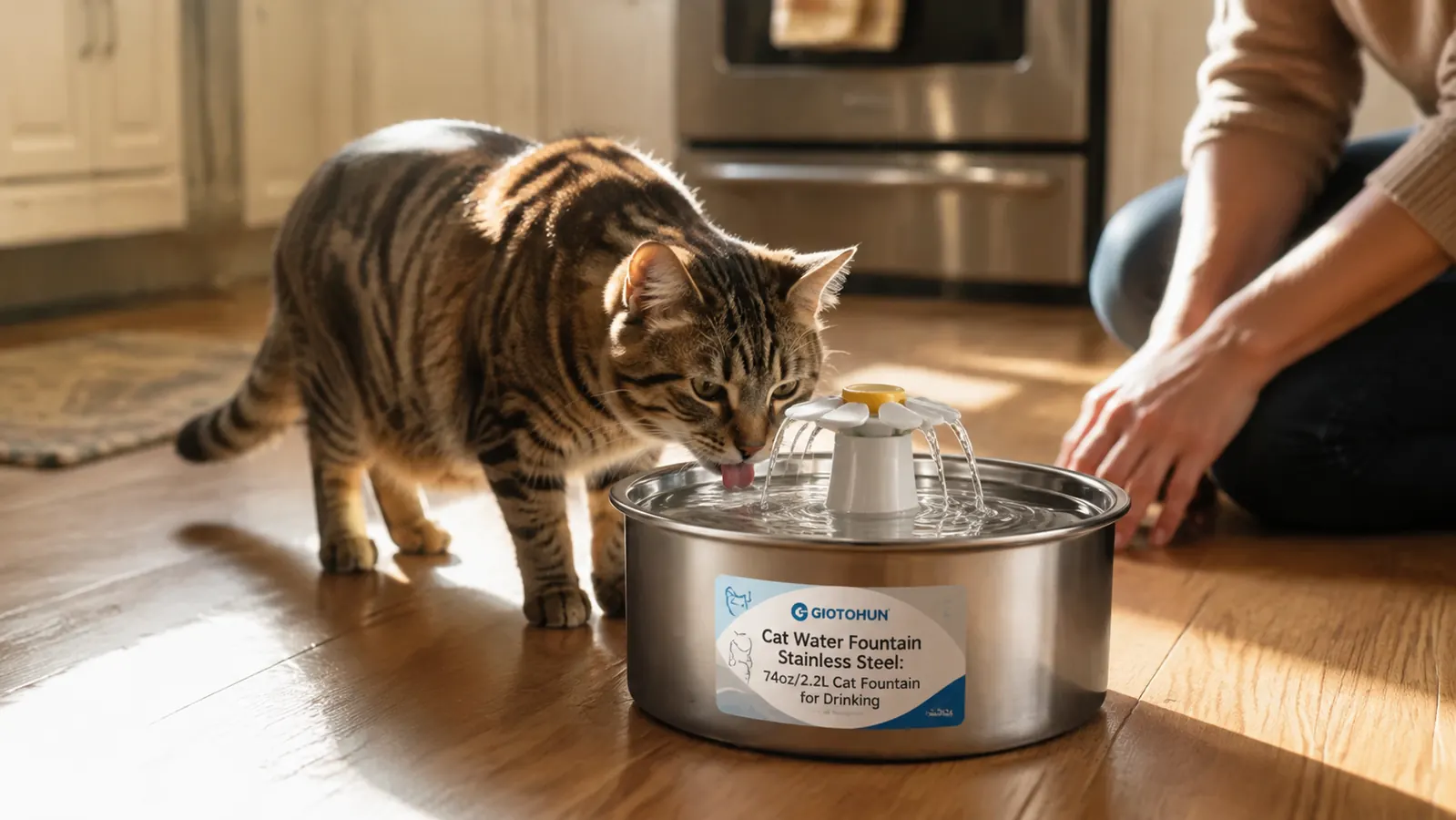
Where Stainless Steel Wins
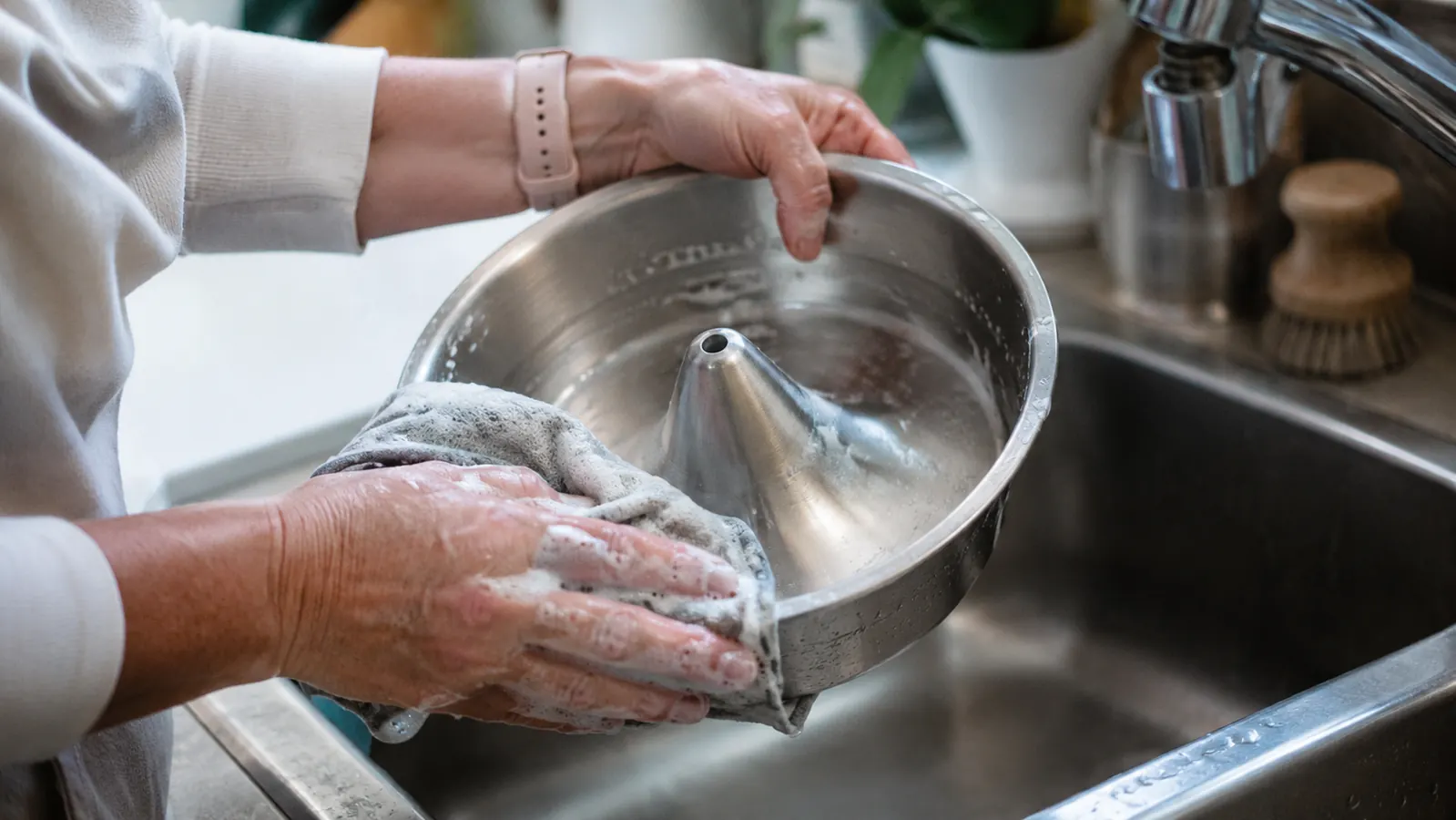
The biggest difference showed up the second week, when I went to scrub both bowls at the sink. The steel bowl rinsed clean in about a minute with a sponge and a little dish soap. The plastic bowl needed a proper scrubbing, and even then, around the low corners where the ribs of the mold meet, there was a slick of film I could not get off no matter how hard I worked. Plastic is porous at a scale you cannot see, and once it gets micro scratches from a scrubby sponge or a cat's claws, that film finds a home and keeps coming back.
Stainless steel does not have that problem. The surface is smooth and non porous, so bacteria and that slimy biofilm have nothing to grip. I clean the steel bowl more easily and less often because it stays visibly clean longer. For a fountain, which is sitting out all day in a warm room with moving water, that is the difference that matters for your cat's health. I do not want to overstate it. We never saw either cat get sick. But the steel one is simply a cleaner thing to drink from, and that is the entire point of a fountain.
Steel also took the daily knocks of a multi pet house without a mark. Ruby has bumped both fountains with her nose, and the steel one has a small dent in the rim from when one of the cats jumped off the shelf above it. The plastic one has a hairline crack on the base that I keep meaning to patch. Nothing has leaked from either, but the steel one is plainly built to take more punishment and still look like the day I bought it.
Where Plastic Wins
I am not going to pretend plastic has no place. It is cheaper up front, usually by a few dollars, which matters if you are not sure a fountain will work for your cat and you do not want to commit much money to the experiment. Some cats take weeks to trust a new fountain, and a low cost plastic model is the sensible way to find out without a big outlay. If your household has a single cat and you are willing to scrub the bowl on a schedule, plastic is a perfectly honest choice.
Plastic is also a little lighter, which means it is easier to pick up and carry to the sink each week, and easier to wash in a top rack or by hand. The plastic model in our house ran just as quietly as the steel one, the pump pushed water at the same rate, and both used the same style of filter. On the pure mechanics of moving water, there was no difference at all. If you think of a fountain as a simple way to keep a water dish full and moving, the plastic one does that job completely.
The steel bowl rinsed clean in about a minute. The plastic one kept a slick of film in the corners no matter how hard I scrubbed, and that is the whole decision in one image.
What Nobody Tells You About Cleaning Either One
Both fountains are more work than the box suggests. The marketing photos show a happy cat drinking from a sparkling bowl, and nowhere does anyone mention that a circulating fountain grows a film on the pump, the hose, and the inside of the bowl in warm weather. We live in the South, and in July both fountains needed a full clean twice a week, not once a month like the leaflets claim. If you are not ready for that, no material choice saves you. Steel just makes each clean faster and more effective.
The other thing nobody tells you is that the filter does not do all the work. The charcoal filter catches odors and some debris, but the slime is on the bowl and the pump, and only a scrubbing reaches that. A stainless bowl keeps that slime from seating into scratches the way plastic does. We change the filter about every three weeks and do a full pump and hose wash with white vinegar every month. That routine has kept our water glass clear and the cats drinking, on both fountains, but it is easier to keep up on the steel one.
Does Material Change How Much Your Cat Drinks?
Our older cat, Mabel, who is 14 and had a bout of urinary trouble two years ago, drinks from whatever is moving. She started on the plastic fountain and switched to the steel one the week the two sat side by side, and she has stayed on it since. I honestly do not think it was the steel she preferred. I think it was which bowl was cleanest, because a cleaner-smelling water dish is what cats gravitate to, and the steel one stayed cleaner. So the material influenced her drinking, but only through the back door of hygiene.
The deeper point is that getting a reluctant cat to drink is about moving, fresh water, not about the bowl material on its own. A plastic fountain that you scrub faithfully will beat a steel fountain that you ignore. Do not buy stainless steel and then let the routine slide, expecting the material to save you. It will not. Steel just makes the habit you need to build an easier one to keep. For us, because the steel bowl cleaned up in a minute, we actually kept up the schedule, and that is what got Mabel drinking more.
The Glitch Nobody Sells You On
Every fountain, steel or plastic, has one quirk you should know before you buy: the pump whines if the water gets low. Both of ours started making a light hum the moment the level dropped below about a third of the tank, which happens faster than you would think in a house with two cats and a big dog lapping at it. The fix is simple, top the tank up every couple of days, but if you let it run dry the pump can overheat and burn out. That is how most fountain deaths happen, not from the bowl material.
The other glitch is that moving parts wear out, and they are identical in both. The pump and the filter are the same type whether the bowl is steel or plastic, so the long term running cost of the two fountains is effectively the same. Nobody should buy a fountain thinking it is maintenance free. Treat it as a small appliance with a filter you replace and a pump you wash, and it will last. On that score the steel one has the edge only in the bowl itself, which is the part that sees the most wear when the dog bumps it around.
Filter, Pump, and the Long Term Running Cost
The maintenance on both fountains is basically the same, because the working parts are the same. Both use a small charcoal filter puck that you swap every three or four weeks, and a three pack costs a few dollars. On the GIOTOHUN stainless model the filter drops into a well in the smooth steel bowl, so changing it is a one minute job with no scrubbing around the edges first. On the plastic one the same filter sits in a recess that seemed to gather film, so I found myself cleaning that channel out every single swap instead of every other one. It is a small difference, but it is the kind of small difference that decides whether you actually keep up the schedule.
Pump life is worth a thought before you buy. A fountain pump is a small magnetic impeller, and it lasts longest when it never runs dry and when you wash the film off the shaft once a month. Both of our fountains used the same style of pump, so on pump life the steel has no advantage at all. What the steel does buy you is visibility: the pump well in the GIOTOHUN bowl is clear and easy to reach, whereas the plastic one has an opaque, faintly tinted bottom that hides the well until you squint. That one detail makes the monthly wash feel like a chore you can actually finish, which is honestly why the steel fountain is the one we kept up.
Who Should Buy Which
Buy the stainless steel if you have more than one pet, if you have ever thrown away a plastic bowl or dish because it would not come clean, or if you know yourself and you would rather buy one good thing than fuss with a cheap thing twice. The slightly higher price buys you a fountain that is easier to keep safe and that will still look new a year from now. That is the definition of value to me, and it is why the stainless one is the winner here.
Buy the plastic model if you are trying a fountain for the first time and want to spend as little as possible to test the idea, or if you have one easygoing cat and you are disciplined about a weekly scrub. It is a real fountain and your pet will drink from it. Just go in knowing the bowl will be harder to keep clean and that you will probably replace it sooner. There is no shame in that path. It is the honest one for a tight budget or a first try.
Our Final Take
After six months running both side by side, I would put my own money on the stainless steel every time, and I have. The plastic fountain now lives in a cabinet as the backup, collected the day the steel one proved itself. The steel one has been on the mudroom floor since March, running day and night, and a scrub at the sink is a two minute job instead of a ten minute negotiation with the corners. For a household that actually wants to keep the water clean, that is what wins.
Pick the fountain you will actually keep clean
The stainless steel 74 ounce model has held up to daily use and two cats plus a 48 pound dog for a full season. See today's price and make the call.
Amazon Check Today's Price on Amazon →