
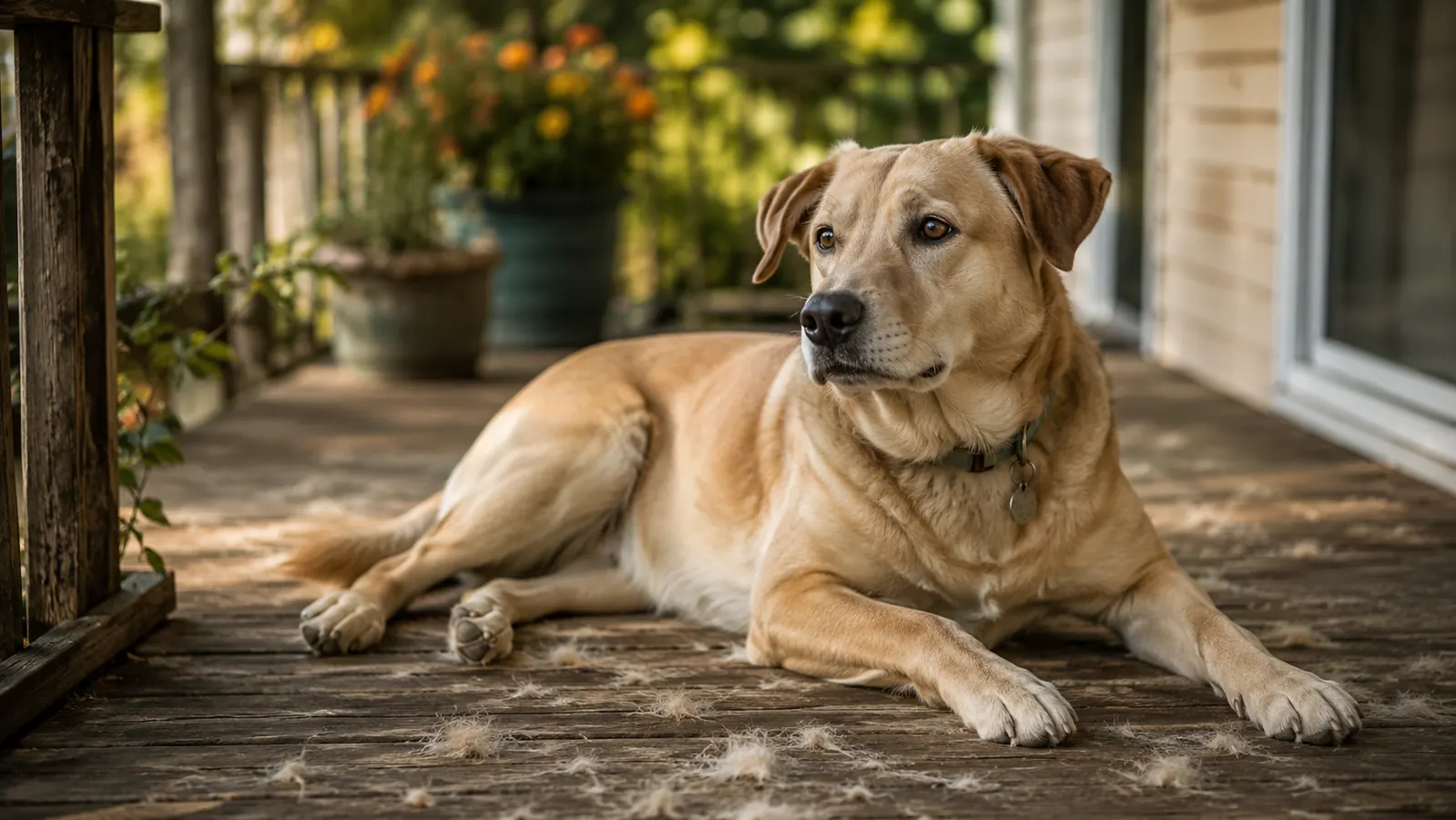
I kept the receipt for two years, which tells you what my wife thought of yet another brush going into the grooming drawer. The FURminator has now outlived that receipt, outlived two springs of shed, and outlived every cheap slicker and rake I bought in the same drawer beside it. Four years of near-weekly brushing across two medium dogs is the long version of this review, and it is the version that actually answers the question people ask me over the fence.
That question is not whether it works on day one. Day one I pulled a fist sized clump of loose undercoat out of our yellow lab mix Gus and was impressed, same as anyone. The real question is whether it still earns its spot when the novelty wears off, whether the teeth hold their edge, whether it becomes the tool you reach for or the one you step over. Four years in, I can answer that honestly. The short version is that it is still the first brush out of the drawer every spring, and it has not once gone back to the couch instead.
It is only fair to say I came at this as a skeptic. The pet aisle is full of gadgets that photograph well and disappoint by Tuesday, and I have returned my share. So when the FURminator kept turning up on every message board I read about dogs that shed, I filed it under overhyped and bought the cheap thing first. The cheap thing is what finally convinced me to try the real one, because it did a third of the job and clogged every time I used it.
The Quick Verdict
Four years and roughly 190 sessions later, the FURminator still does one thing better than anything else I own: it strips the loose undercoat that every other brush leaves behind. It is durable, it is genuinely easy to keep clean, and the only reasons it is not a five are that it needs the right coat, the right pressure, and a weekly habit you have to actually keep.
Amazon Check Today's Price →The deshedding tool that earned four straight years of weekly use in our house
For a dog that loses a winter undercoat, this is the one I still reach for first every spring. If your sofa is slowly turning into a fur museum, this is where I would start. Check today's price.
Amazon Check Today's Price on Amazon →How I've Used It: Four Years, Two Coats, One Weekly Routine
Our house runs on two medium dogs. There is Gus, a 64 pound yellow lab mix with a proper woolly undercoat that sheds in two sudden bursts a year, and there is Penny, a black and tan Australian Shepherd who does not burst but drifts a steady fair of loose hair all year long. They are about as different as two coats can get, which made the FURminator a good test of whether it was a one trick tool or a real daily worker.
I bought the medium size for long hair, because that is the version built for Gus's kind of plentiful undercoat. It was a deliberate fit for the harder job, and it turned out to handle Penny's steadier, middling shed without complaint too. If you have a dog at either end of the size scale, do not guess, match the size to the coat and the body, the manufacturer puts a guide right on the box and it is worth one read.
My routine settled into a weekly pass through the worst of spring and fall, then a lighter touch every couple of weeks the rest of the year. Roughly 190 sessions total, some on the porch, some over a drop cloth in the kitchen when the weather turned. Each one runs about ten minutes for both dogs, and that has been consistent from the first month to the last. The time cost never surprised me, it is the same ten minutes a slicker would take, it just returns a good deal more fur.
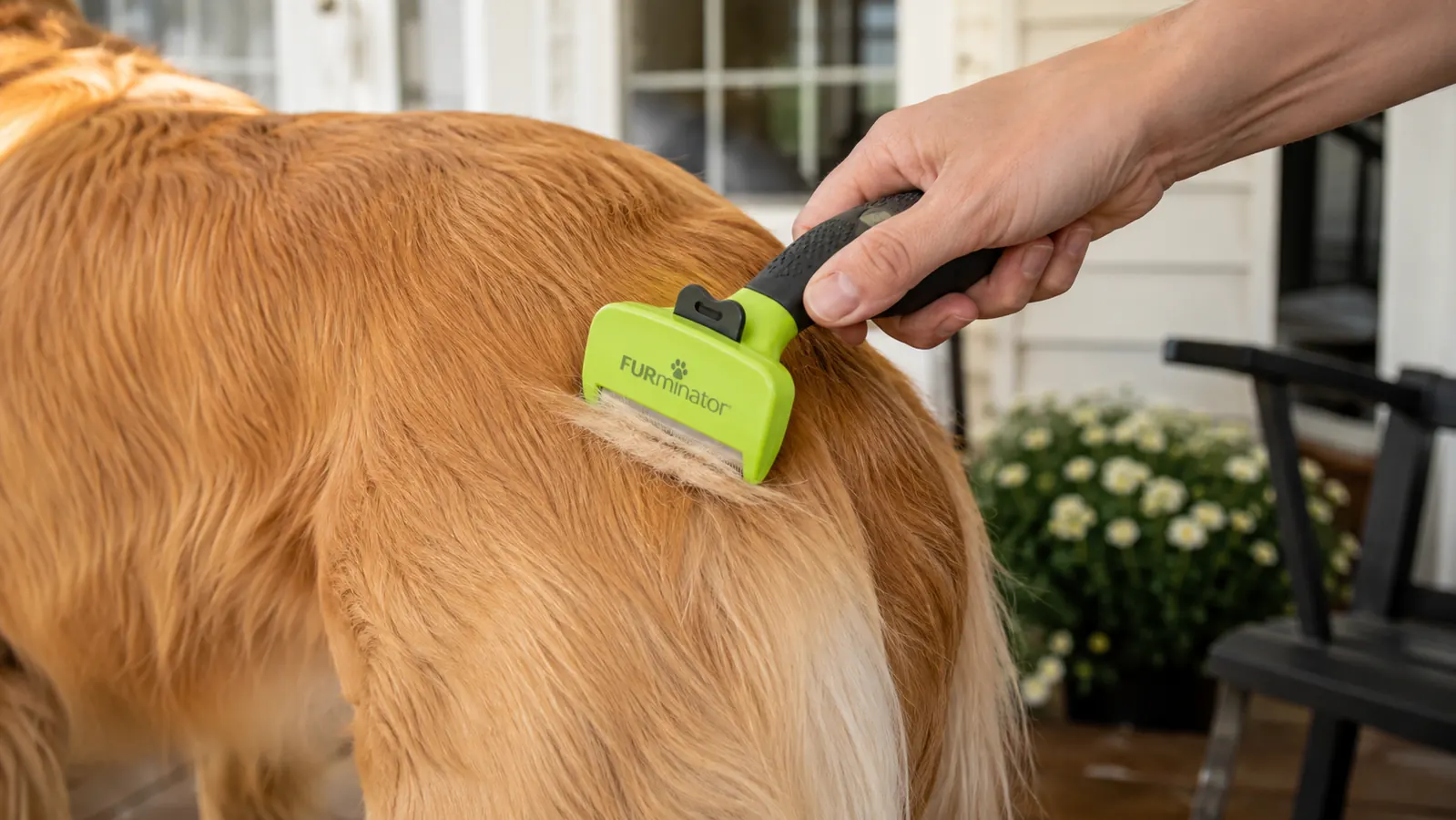
The technique I landed on is simple and I did not invent it, I just follow what works. Light pressure, in the direction the hair lies, and I stop the moment a stroke comes back clean. That last part is the whole game. The FURminator pulls the loose undercoat layer and leaves the guard hairs alone, so when the brush comes back empty, the session is done. Push harder or keep going and you are past the point of help and into the point of harm.
The mistake most people make, and I made it the first two weeks, is to bear down like you are scraping ice off the windshield. The tool does not need force, the stainless edge does the reaching. Feather light is not a style choice, it is the correct amount of pressure. Once I stopped fighting it, the dogs relaxed and the fur actually came out cleaner, because a light pass does not drag or pinch the skin underneath.
What A Real Weekly Session Looks Like
A session is never dramatic, and that is the point. I set a drop cloth on the porch, settle Gus with a pat, and run the FURminator in long passes down his back and haunches in the direction the hair grows. Ten minutes of steady, light strokes. The fur comes up in soft ribbons that I release with the button into the bag at my side whenever the head packs full.
Penny is the trickier dog because her coat is less forgiving of a heavy hand. With her I keep the pressure so light the tool almost floats, and I spend more time on the spots where undercoat mats, around the neck and behind the rear. She tells me when I have it right by going still and leaning in, and she tells me when I am pushing wrong by stepping away. I have learned to listen both times.
I finish both dogs by running a finishing brush over the top to smooth the guard hairs and catch anything a loose pass missed. Then the drop cloth gets folded into the bin, the head of the tool gets a rinse, and we are done for the week. Ten minutes, twice a month most of the year and more in spring. That is the whole commitment, and it is small enough that I have actually kept it for four years.
What Four Years Told Me About The Build
Durability was my biggest doubt going in, because grooming tools are where cheap plastic goes to die in my experience. A wire rake snaps, a slicker sheds its pins, a comb bends. This one has been different. The stainless teeth still bite after four years, the handle has not cracked, and nothing rattles or shed paint. It is built from metal and thick plastic around a single moving part, and there is simply not much there to break.
I half expected the teeth to dull into a blunt nothing after a year of regular use, the way a saved kitchen knife eventually needs a stone. They have not. Four years in they still converge to an edge that catches the undercoat without scratching the skin, and I have done nothing to maintain them beyond keeping them clean. That alone separates it from every cheaper deshedder I have handled.
The feature that saved me more grief than any other is the release button set in the center of the blade housing. The old cheap brushes I owned loaded up with fur and I had to pick at them with my fingers for five minutes to clear a half hour of brushing. This one, one push and the packed sheet of undercoat drops clean off onto the ground or the bag. That single detail is why I kept using it rather than a fancier looking rake that loaded up the same way.
On maintenance, the honest answer is that the tool is the easy part to keep up. After a session where the fur has packed in, I run the release button, then rinse the head under warm water and let it dry. A five minute cleanup that has kept the moving part and the edge working for years. The dogs, the routine, and the drop cloth take more thought than the tool ever has.
Where It Surprised Me Over Time
The biggest surprise was not that it removed fur, it was how consistent the result stayed. When I kept the weekly pass up, the amount of loose hair that reached our sofa and our clothes dropped by a wide margin, and that reduction held year after year rather than fading after the first novelty. It is a maintenance tool with a maintenance-forced result, and that sat fine with me once I understood it was never going to be a one time fix.
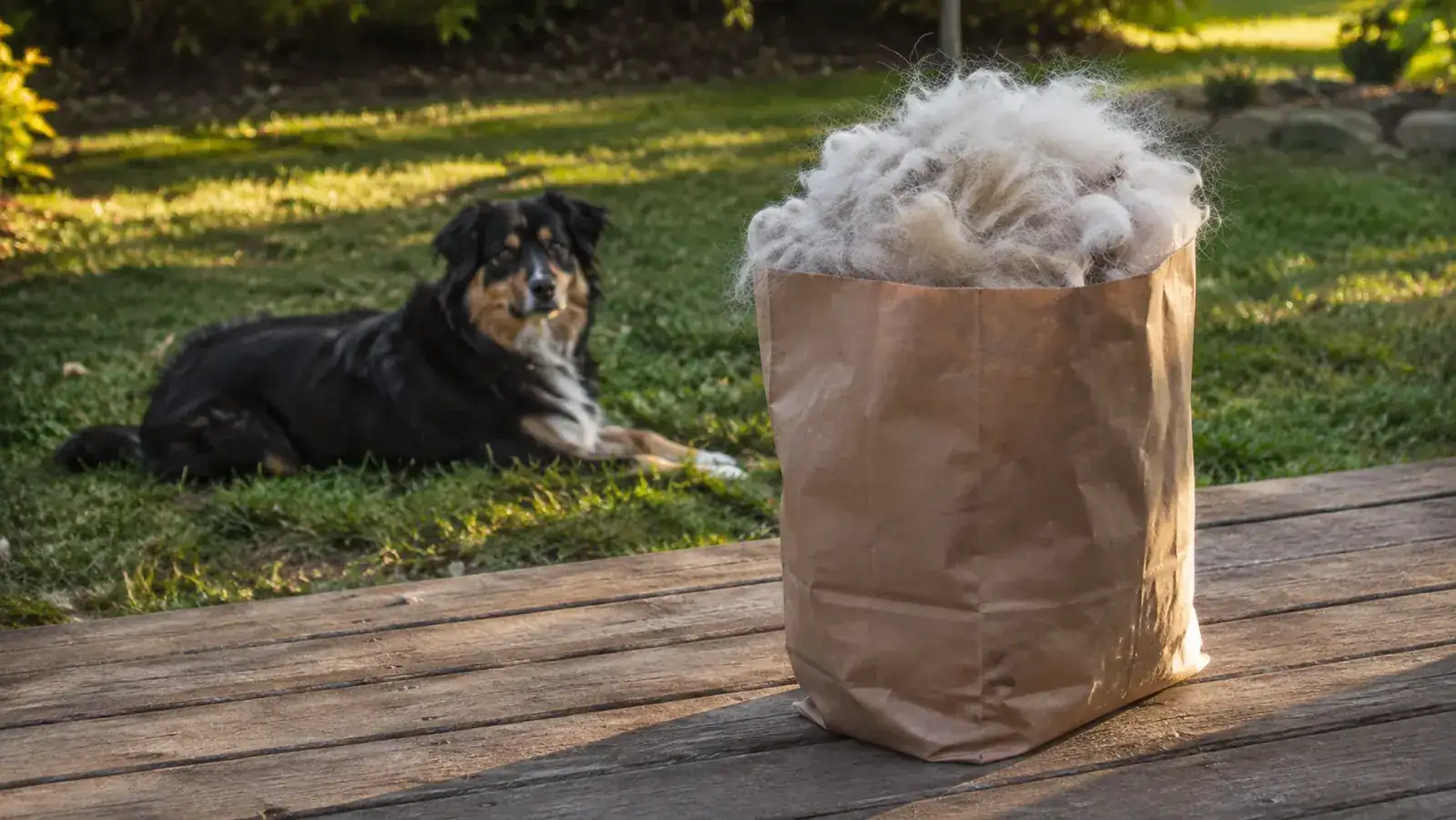
The seasonal rhythm is real and worth planning around. Come early spring I triple my sessions for a few weeks, and that is when the return is highest, Gus can give up a whole grocery bag of undercoat across the season. The rest of the year a light pass keeps the drift down. Planning for the surge instead of being caught by it changed our house more than the tool itself did.
The second surprise was the dogs themselves. Early on both were wary of the blade edge, Penny especially. Over the weeks they learned the feather-light pass did not pull or sting, and now both lie still for it and treat it as a normal part of the day. That calm is something no amount of force would have bought, and it says more about the tool than any spec sheet. A tool a dog fights is a tool you stop using, and neither of ours has ever fought this one.
On the measurable side, I can point to the vacuum. Before, emptying the canister brought up a solid pad of fur along with the dirt, and I was fishing hair out of every load of laundry. Now the canister is mostly dirt and the dryer lint trap is not a fur brick. Small wins, but they are the wins that keep a tool near the top of the drawer instead of at the back.
The Real Tradeoffs, Four Years In
There are honest limits and I am not going to bury them. This tool only earns its keep on a dog with a genuine undercoat, which means the double coated breeds, the labs, the goldens, the shepherds, the huskies, the collies and their mixes. On a single coated or curly dog it mostly just glides and does little, and on mats it will not help at all, you have to untangle those first or you will make things worse.
It also does not stop the top coat from shedding. Regular brushing cuts the loose undercoat layer way down, but our dogs still lose some fur the normal way, and pretending otherwise sets you up for disappointment. And you cannot use it over a bare floor unless you enjoy redecorating, the fur comes off in sheets. A drop cloth or the porch is part of the routine, not an optional extra.
Nor is it a finishing tool. On a long haired dog I still run a finishing brush over the top afterward to smooth things out, and the nail trims and the bath still happen on their own schedule. Think of the FURminator as the heavy lifting stroke of a grooming routine, not the whole routine, and it earns its place. Expect it to be the whole answer and you will be disappointed.
What I Liked
- Teeth still sharp and handle still solid after four years of weekly use
- Center release button spits out packed fur instantly instead of needing a pick
- Pulls the loose undercoat layer faster than any slicker I own
- Handled two very different coats well, the steady shedder and the seasonal blower
- Designed to be cleaned and reused, not thrown away after a season
Where It Falls Short
- Only earns its keep on double-coated breeds, useless on single or curly coats
- The weekly habit is the requirement, an occasional pass barely helps
- Top coat still sheds, this is a throttle on undercoat, not a shedding cure
- You must brush over a drop cloth or outside or you coat the room
After four years and roughly 190 sessions across two dogs, I have never once thrown this into the junk drawer the way I did every cheap brush before it.
Who This Is For
This is for the owner of a double coated or heavy shedding dog who is ready for a tool that does the loose undercoat work their regular brush leaves behind. If you have a lab, golden, shepherd, collie, husky, or a mix of any of them, and you can manage a ten minute session most weeks during shed, this will measurably cut the fur reaching your furniture and clothes. Four years of our life says it pays for itself in the first spring.
If you are on the fence about the cost, weigh it against what a single bad season of shed costs you in lint rollers, vacuum bags, and washing the throw blankets every other day. For a household that lives with double coated fur, that math has favored this tool for four years running. It is not the cheapest thing in the drawer, but it is the last one I would give up.
Who Should Skip It
Skip it if your dog has no real undercoat, or carries a single, curly, or wired coat, because it will do little and may just glide over the surface. Skip it if you will not keep a routine, because once a month is barely a dent in a seasonal shed. And skip it if you want a five minute miracle with no mess, the drop cloth and the ten minutes are part of the deal no matter how you set it up.
And one more honest skip: if shedding does not really bother you, if a little fur does not register, then the FURminator is solving a problem you do not have and you can spend the money elsewhere. It earns its keep entirely through use. A tool that stays in the drawer because you never quite get around to it was not worth buying, no matter how well it works.
Four years of proof that the deshedding tool you keep using is the one that works
For the dog that loses a winter undercoat, this has never let us down. Start here and test it on today's price.
Amazon Check Today's Price on Amazon →