
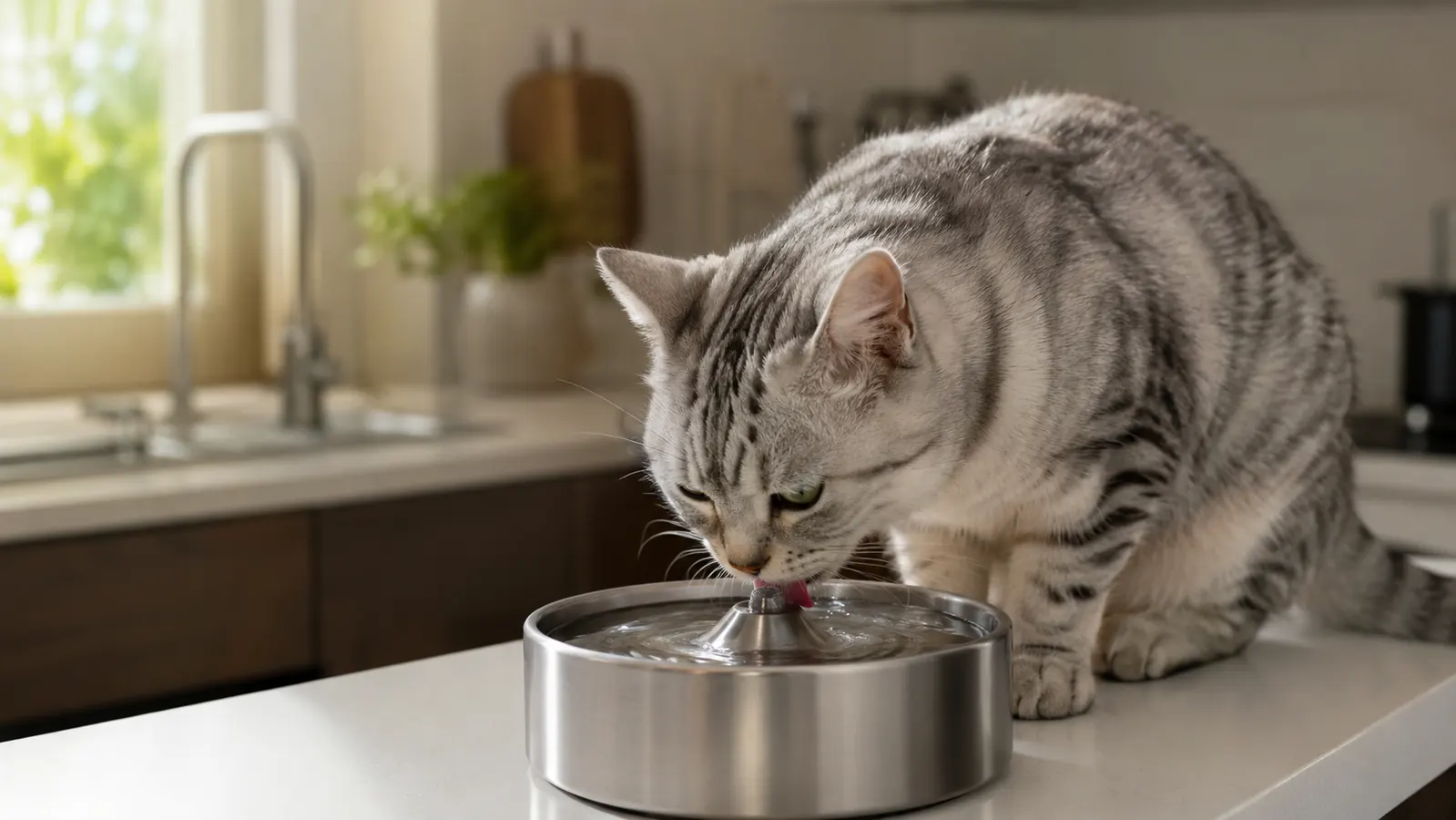
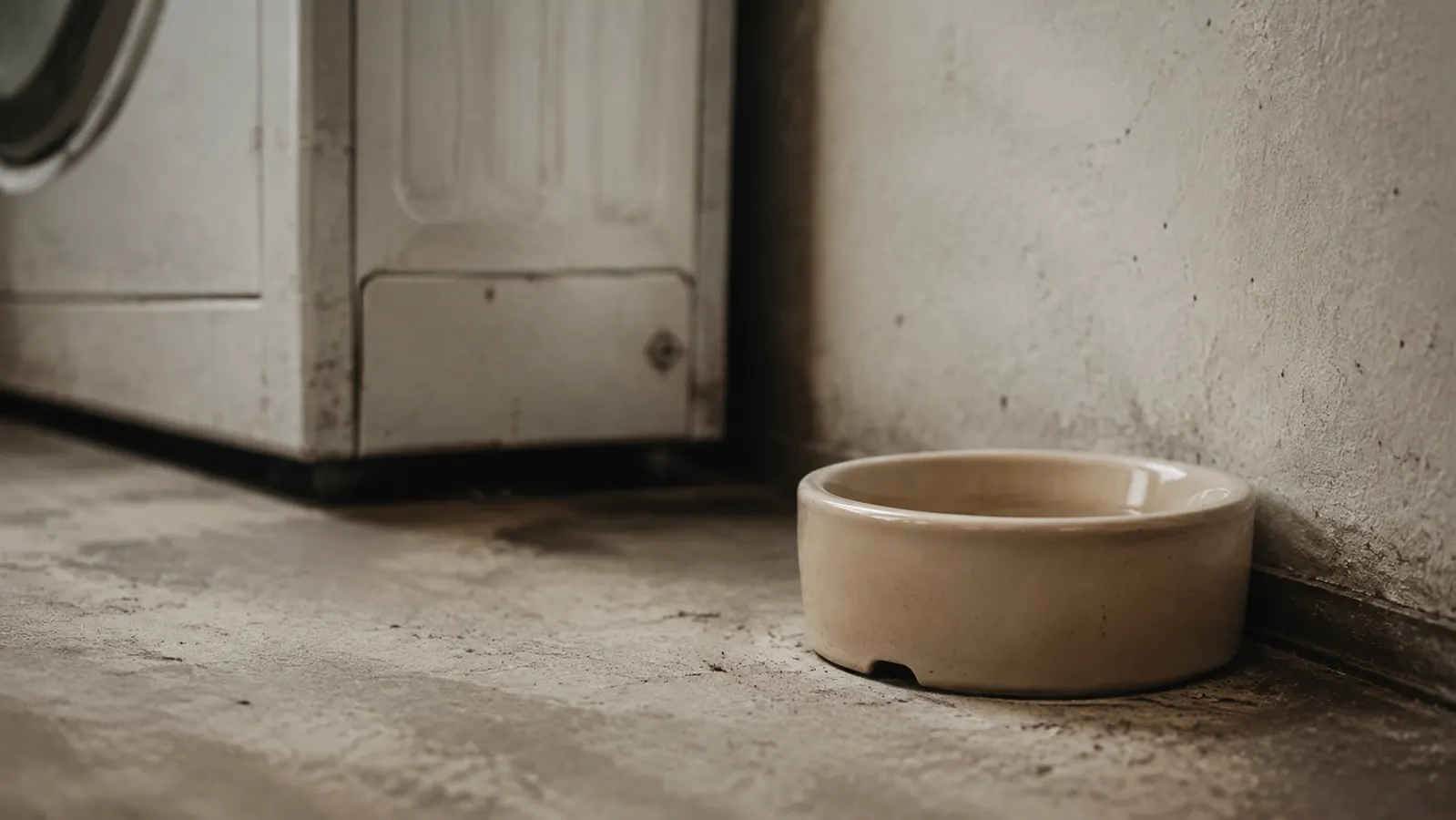
Our cat Mabel has never been what you would call enthusiastic about water. Eleven years old, silver tabby, opinionated about everything, and for most of her life she treated the water bowl the way we treat a folded bill in the mail. She would sniff it, circle it twice, and walk away. By last summer I was setting out a fresh bowl twice a day, rinsing it with hot water, even moving it from the hallway to the laundry room to the kitchen in case it was a location problem. None of it mattered. Mabel would drink just enough to survive, and no more. Along the way I had saved the GIOTOHUN stainless steel fountain in an online cart, then deleted it twice, because I was sure it was a gimmick that would not do anything a clean bowl could not.
The vet noticed it before I did. At her yearly checkup in July he ran a hand over her and frowned at her skin, then said the thing that made me finally pay attention. Older cats, he told me, do not bounce back from being dehydrated the way kittens do. Their kidneys have already slowed down. If they are not drinking enough now, it only gets harder as they age. He was not scolding me. He was just stating a fact, the same calm way he says everything.
That night I stood in the kitchen and looked at the bowl Mabel had ignored all day. Then I thought about the one thing she did reliably drink from around the house: the dripping bathroom faucet. Every single morning she waited by the sink and lapped at the stream, even in winter when the water was cold. I had known this for years and never connected it. She did not want still water. She wanted the water that moved.
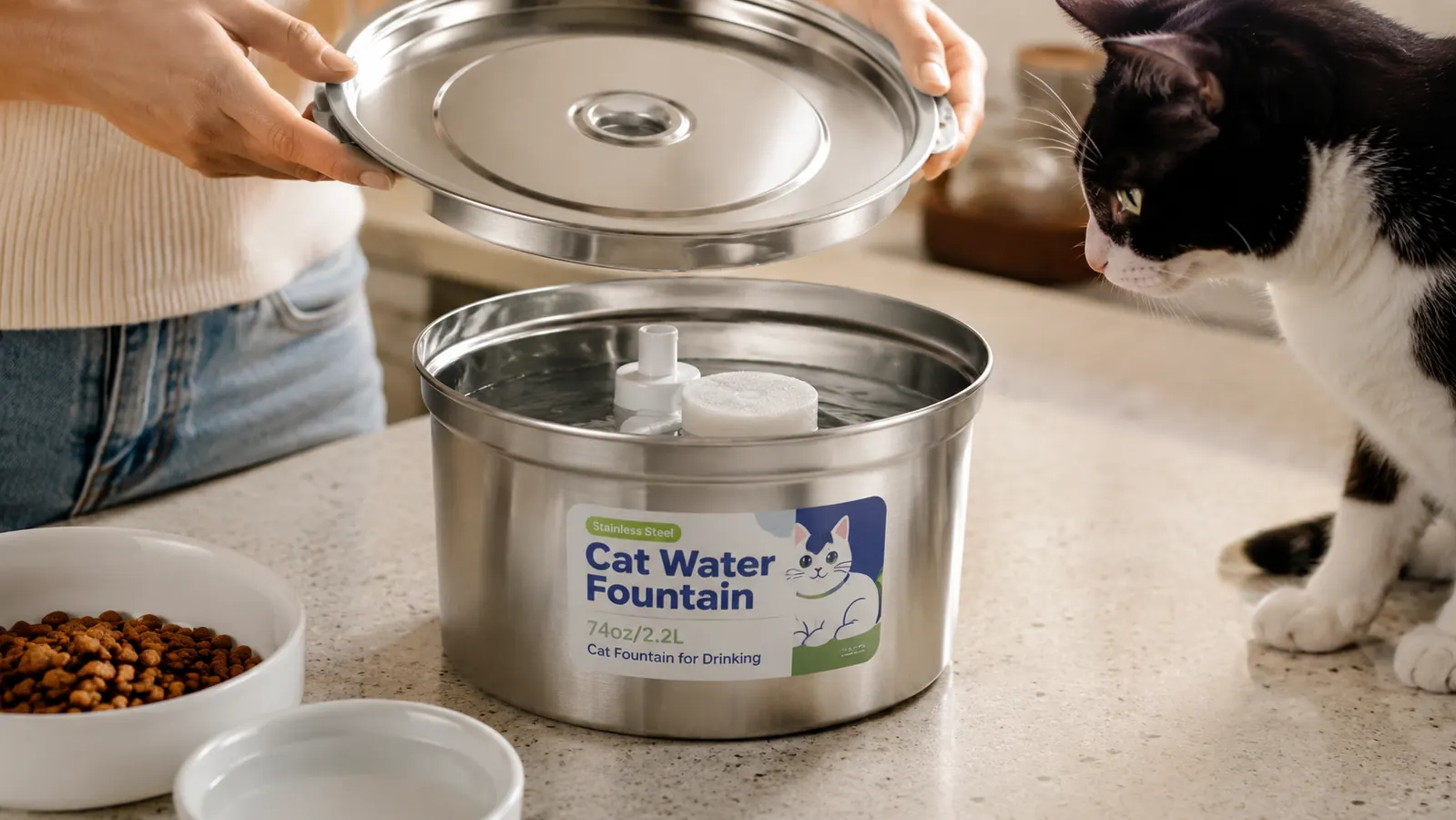
So I did the thing I had sworn I would never do. I bought one of those circulating pet fountains I had written off as a gimmick for people with more money than sense. We started with a stainless steel one, the GIOTOHUN 74 ounce model, mostly because I wanted a metal bowl and not plastic, and because it was priced low enough that I did not feel like an idiot for trying it.
She did not want still water. She wanted the water that moved. It had been in front of me every morning for years, at the bathroom sink.
If your cat laps at the faucet, a circulating fountain is worth a try
Moving water is the one thing that finally got our stubborn old cat to drink. If yours has the same habit, a stainless steel fountain is an inexpensive thing to test before you worry yourself further.
Amazon Check Today's Price on Amazon →The first week was not a success. I will be straight with you about that, because most fountain stories skip it. Mabel watched the gently running water from across the room like it was a trap. For nine days she would not go near the thing. I set it up on the kitchen counter where she could see it from her chair, kept the noise down, and left her alone. On the tenth morning I came in and found her with her front paws on the counter, lapping at the stream, and she did not stop until I was halfway through my coffee.
That was four months ago, and she has not asked for the bathroom faucet once since. I still top up the bowl at the sink for the dogs, but Mabel ignores it now and climbs to her fountain. The moving water did what eleven years of still bowls could not. She drinks little and often, all through the day, and at her weight check last month she was holding steady instead of slowly dropping. That alone was worth the counter space.
The honest part: it is not set and forget. A fountain has parts, which means it has upkeep. I rinse the bowl and wipe the pump every week when I do the dog bowls, and replace the filter about every four weeks, which is a running cost nobody mentions. The stainless steel on the GIOTOHUN is easy to keep clean, which I chose over plastic on purpose, because the one thing I did not want was a slimy bowl collecting film in the seams. So far, with the weekly rinse, it has stayed clear.
More than anything, the fountain taught me a simple lesson I should have learned years ago. Our pets will tell us what they need if we watch them long enough. Mabel had been telling me for a decade, every morning by the sink, and I had been too busy moving the same bowl around the house to hear it.
What I'd Tell You If We Were Sitting at My Kitchen Table
If you have a cat that drinks less than you would like, do not assume a fountain will fix every picky eater. Cats are individuals. Ours took to it, but some never will, and no piece of gear is worth forcing on a stubborn animal. What I would tell you, over coffee, is to look at how your own cat drinks first. If they lap at the dripping tap or paw at the edge of a still bowl for attention, that is your clue that moving water matters to them.
If that sounds like your cat, a stainless steel circulating fountain is a reasonable, low-cost thing to try before you spend any more time worrying about it. Get one, set it up where they already feel safe, and give it a couple of weeks. If they ignore it, you are out a filter and a little counter space, and you have learned something useful either way. Only if they take to it, like Mabel did, do you keep it. That is not a hard sell. That is just what I wish someone had told me, before I spent eleven years moving a bowl from room to room.
For the cat that only drinks moving water
A stainless steel fountain gave our picky eleven-year-old cat a reason to drink little and often all day. If that sounds like your cat, it is worth trying on the kitchen counter where they already feel safe.
Amazon See Today's Price on Amazon →