
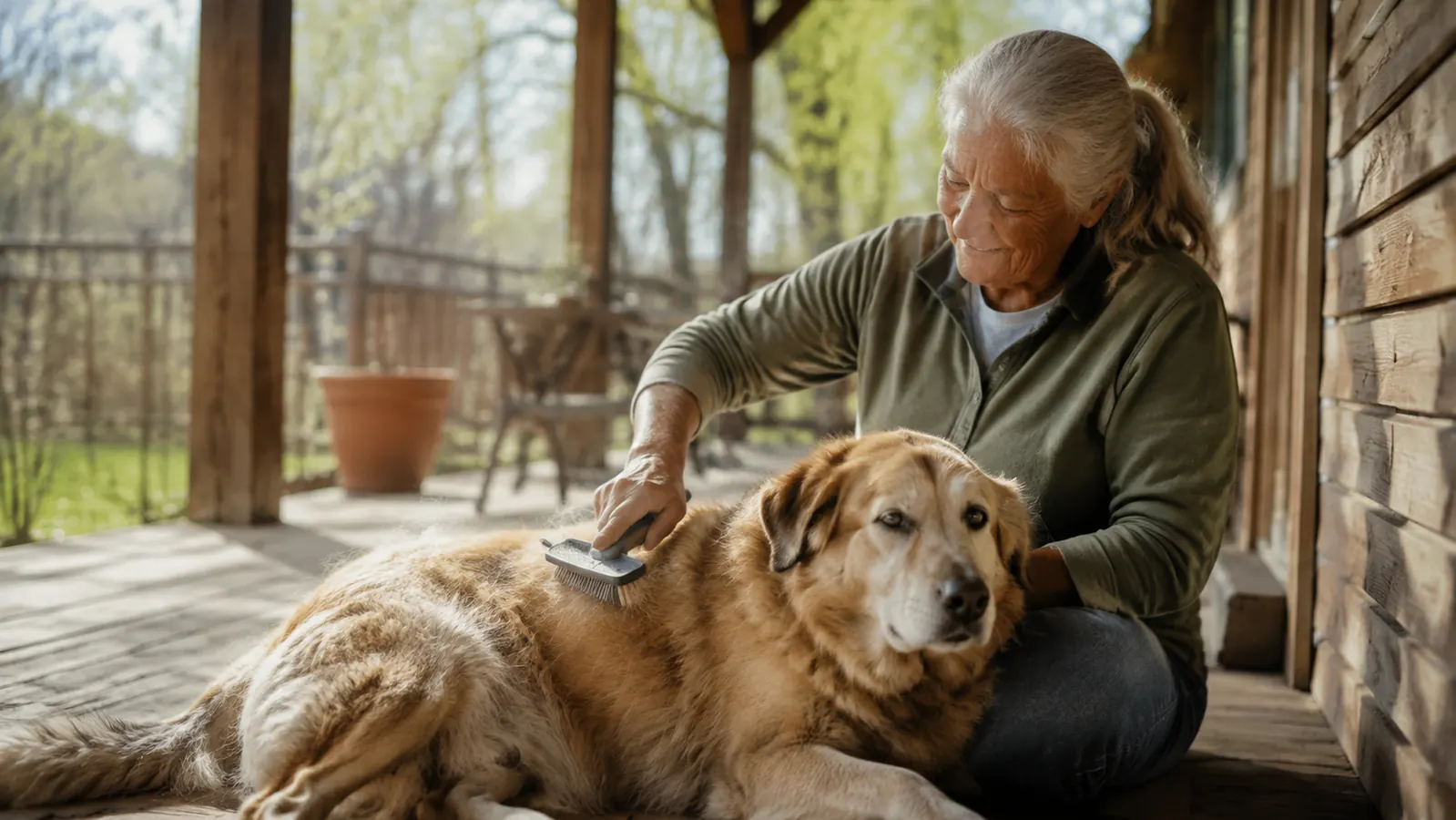
Come April, our living room looks like a tumbleweed farm. Two medium dogs, one a shepherd mix with a double coat that sheds like it is going out of business, and the spring blow-out hits on schedule every single year. I vacuum on a Tuesday and by Thursday the edge of the rug has a grey drift creeping back out again. You sweep a pile, turn your back, and it has grown a second pile.
I grew up with a collie that shed enough to stuff a cushion every spring, so I am no stranger to the chore. But two dogs back to back is a different beast altogether. By mid-April the lint rollers lived on the arm of the sofa full time and I had taken to calling the far corner of the room the wool district. It stopped being funny around the fourth vacuum bag of the month. The FURminator was the one name that came up every time I asked for shed help, from the pet store clerk and from neighbours with herders alike, and I let it sit on the shelf for a long time before I gave it a real chance.
For years I fought the shed the way most people do. I brushed twice a week with a slicker, marvelling at how much fur came off and how much was still sitting on the sofa the next morning. My wife bought a second lint roller and then a third. The dogs simply won the war. I would look at the tumbleweeds rolling past the coffee table and assume that was just the price of having dogs with proper coats.
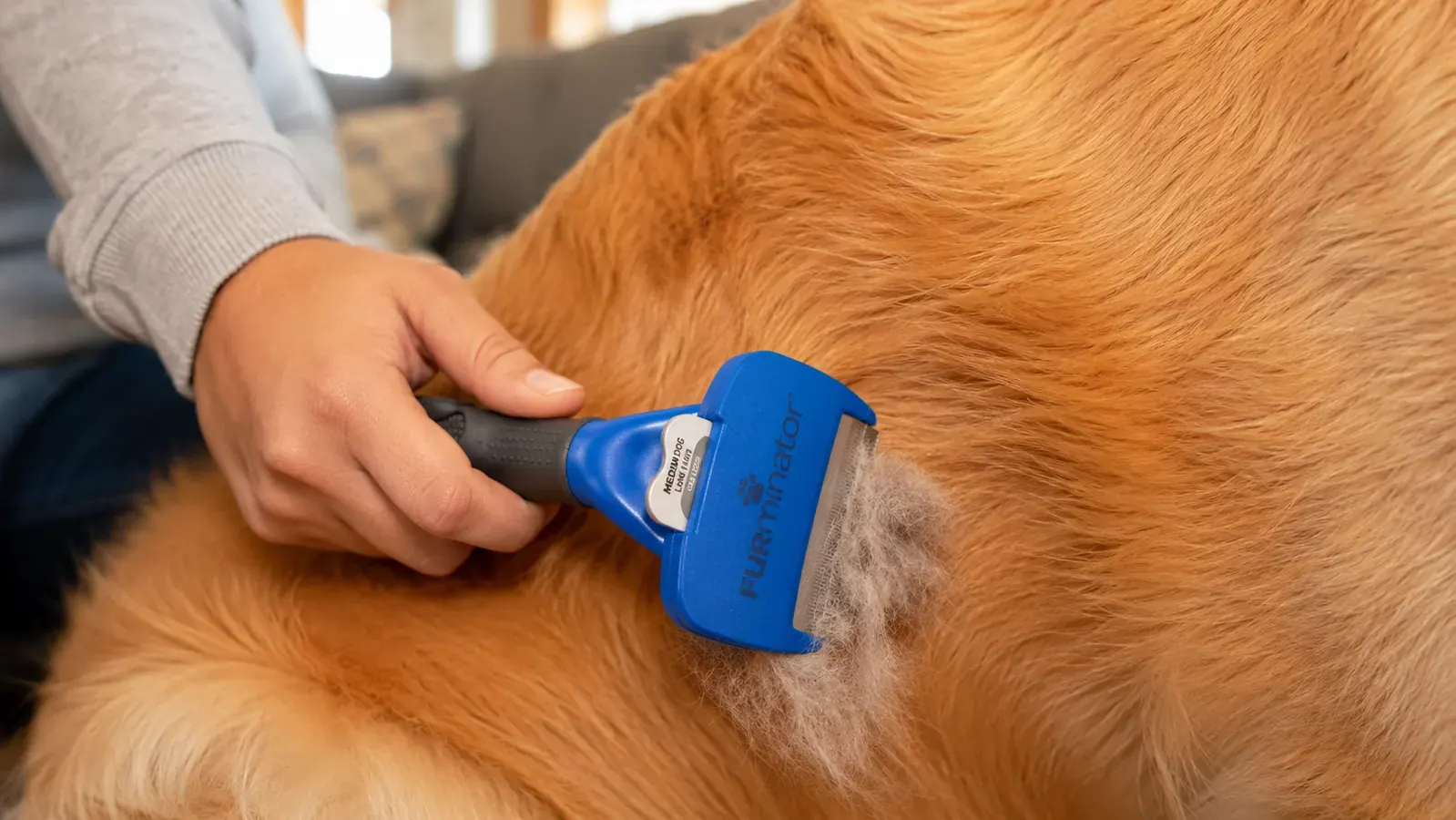
Then last spring I got tired of it and bought the FURminator Medium deshedding tool. I will be honest, I did not expect much. Everything in the pet aisle promises to fix the shed and almost none of it does. A curved stainless edge with a little trigger that ejects the fur looked like one more gadget that would sit in the drawer by June with the other well-meaning purchases.
Two weeks into that first shed season it had changed the way we live between March and May, and I do not say that about grooming tools lightly. The trick turned out to be fewer, deeper passes with the right tool instead of more passes with the wrong one. The blade sits at an angle that reaches the soft undercoat without sawing at the topcoat, so it pulls the loose wool out in clumps you can actually see and count.
The clump that comes off one pass is the size of a small hamster, and both dogs stand there wagging through the whole thing like it is the best part of their day.
The first time I ran it down Daisy's flank, a solid grey ribbon of undercoat came away in one pull. I looked at the fur in my hand, looked at the dog, and she looked back at me like she was relieved to finally be rid of it. That is the part nobody warns you about. The shed is not comfortable for them either. A double-coated dog blowing out in spring is carrying around a thick woollen blanket that no longer fits, and the tool seems to reach a place the slicker never did.
The one tool that finally beat the spring bloom in a two dog house
The FURminator reaches the undercoat the everyday brush never touches, and the fur leaves the dog instead of your sofa. If the tumbleweeds are winning at your place, this is the tool we reach for every March through May.
Amazon Check Today's Price on Amazon -> →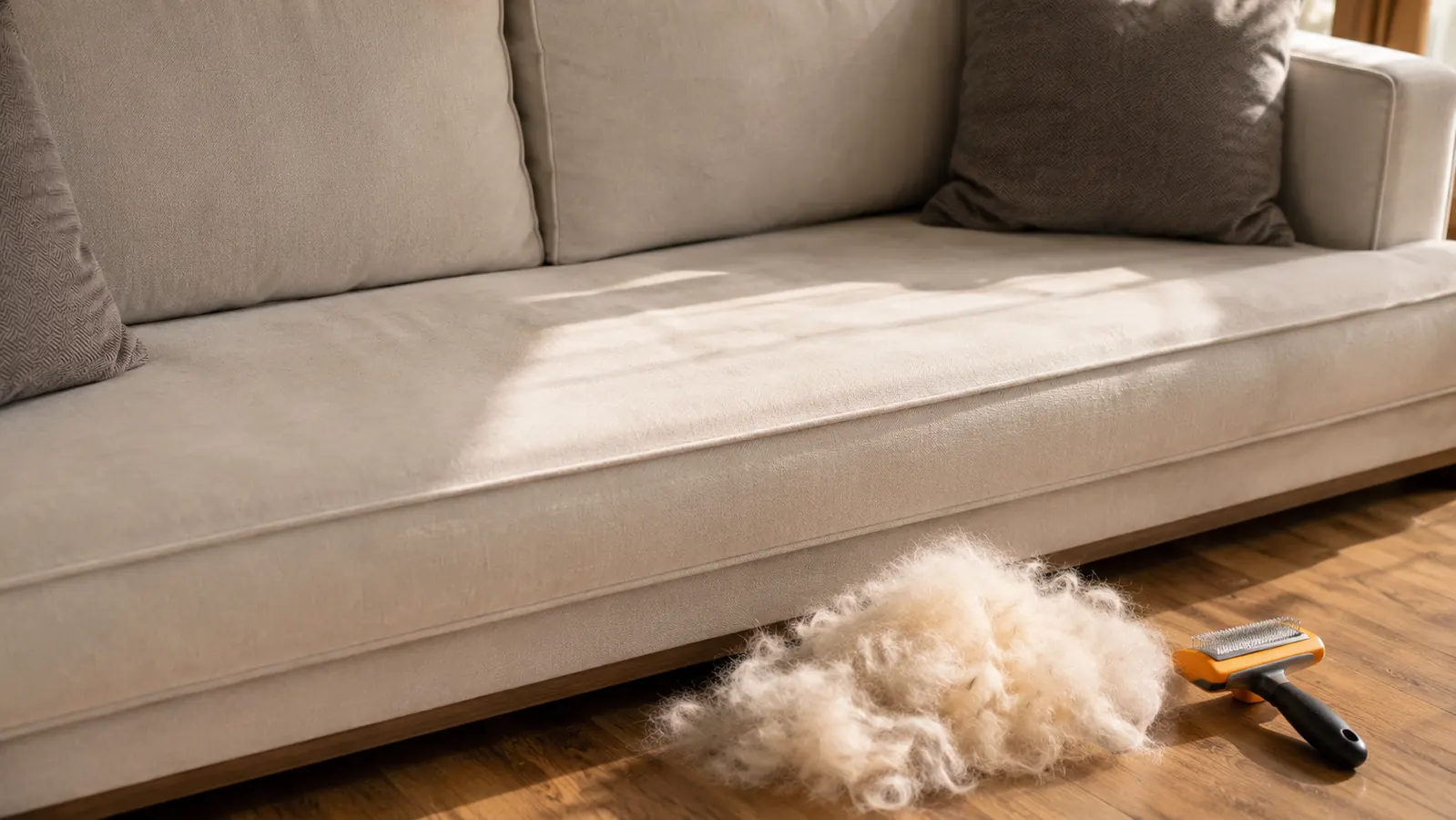
It is not magic, and I want to be as honest about that as I am about the good parts of the FURminator. You still have to use it on a schedule. In the thick of the blow-out I go over each dog every two or three days for about ten minutes, out on the porch so the fur drifts into the yard instead of the hallway. Miss a week and the tumbleweeds come back, but they come back weaker each time because the loose wool is gone before it ever reaches the furniture.
The ejection trigger is the small detail that won me over. Each pass builds a rope of fur on the blade, and one thumb slide on the trigger flicks the whole rope into the pile without me ever needing to touch it. It sounds minor until you have spent years peeling matted fur off a slicker brush by hand. The tool keeps its bite because you clear it on every stroke, and that is half of why it pulls so much more off than the brushes I used before.
What surprised me is how much the routine eased up once we were a month in. The first spring still took effort. By the following autumn and this spring, the shed barely registered. We still vacuum, but not every other day. The sofa stays clean enough that I stopped apologising to guests, and the dogs seem miles more comfortable without the dead undercoat sitting against their skin in the heat.
It also is not for every dog, and that matters. The Medium size suits our two, which run somewhere in the middle of the range for this tool. If you have a thin-coated dog that barely sheds or one with a single smooth coat, you may not need it at all, and I say that honestly because the tool is aimed squarely at the double-coated crowd. For a slick-coated dog it can do too much too quickly. Read the size chart before you buy and go gently around the belly and the feathering on the legs where the skin is thin.
What I'd Tell You If We Were Sitting at My Kitchen Table
If you came over for coffee and asked whether I would buy it again, the answer is yes, without a pause. I would not tell you it will end all dog hair, because nothing does. I would tell you that in a two dog house with the spring blow-out barrelling down on us, it cut what used to be a daily battle down to a ten minute porch chore I actually enjoy, and both dogs love it enough to line up for their turn. That is about as good as dog gear gets in my book.
If the spring shed is winning at your house, start here
We use the FURminator Medium on our two double-coated dogs every shed season and it still lives by the back door. Grab it while it is in stock and beat this year's blow-out before it lands on the sofa.
Amazon Check Today's Price on Amazon -> →